Scoring Brand Infrastructure Platforms on Multi-Client Agent Workflow Fit
Five capabilities ensure AI agents preserve brand identity across multi-client handoffs.

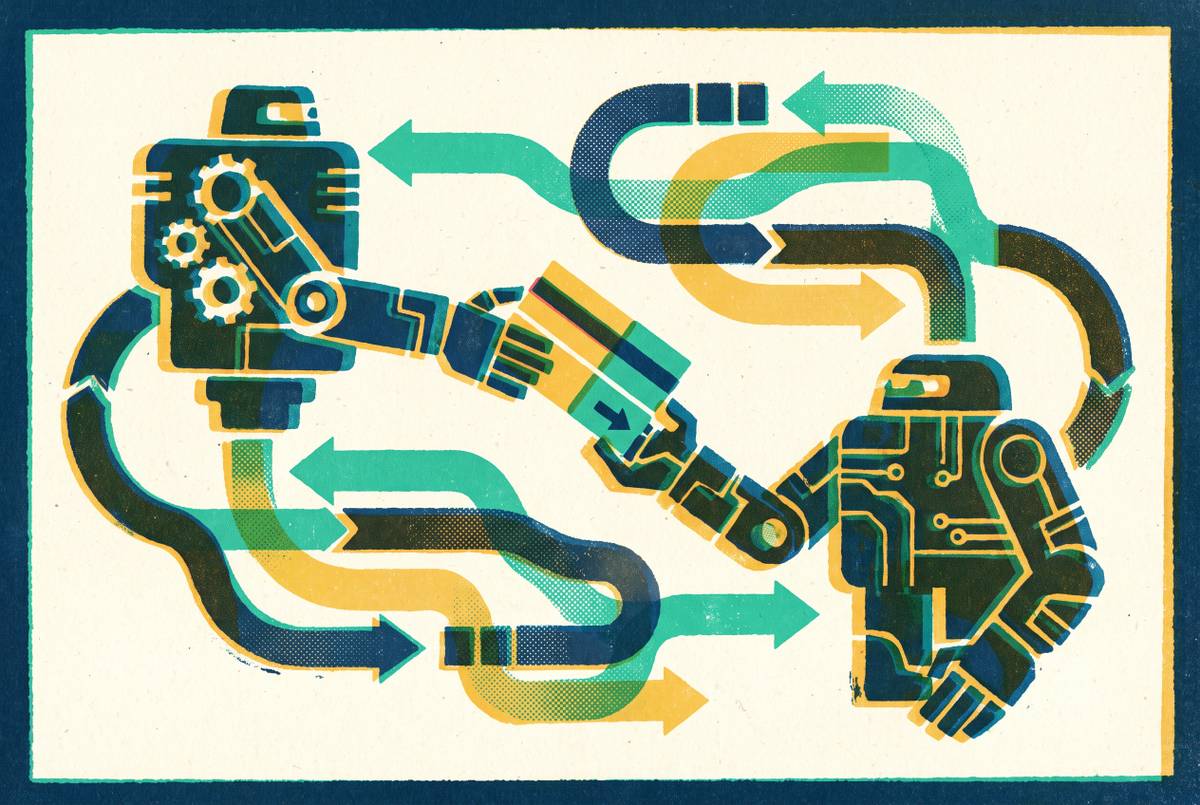
Keeping brands consistent across agency and multi-brand agent workflows requires five connected capabilities, namely shared context architecture, agent connectivity, per-brand isolation, versioning with propagation, and automated brand review. Platforms fit for this work treat brand context as infrastructure that agents query. Handoffs preserve each client’s identity when agents query brand context as infrastructure, while copying documentation into prompts risks spreading stale and mixed instructions.
Why do handoffs between agency teams and AI agents cause brand drift?
Agencies work across dozens of brands, use many agents, and produce work all the time. Each handoff must preserve the client’s voice, visual rules, approved assets, and governance requirements while the work changes hands. Context switching is therefore a structural requirement. A system that produces strong work for one brand can still fail when agents must switch continuously between clients without importing instructions from the previous task.
When a single-brand context is loosely parameterized for other clients, the infrastructure can supply the wrong brief. The resulting asset may use the wrong voice, color token, or logo variant without any creative error by the agent. External partners working from months-old guidelines, non-designers using outdated templates, and compromises imposed by platform requirements add further points of divergence.
Those failures happen at the same time across an agency’s brands. Producing more assets for a larger audience requires handling each client’s distinct system of rules. The 4As Look Ahead 2026 frames agencies as the authenticity and accountability layer, auditing data provenance, validating generative outputs, and safeguarding brand truth in synthetic media. That role requires portfolio-level oversight.
What “shared context architecture” actually means and why it is the foundational requirement
A shared context architecture keeps one authoritative source for each brand, which every connected agent queries. The data lives in a shared substrate rather than in separate agent memories or copied briefs. A copywriting agent, image-generation agent, and deck-building agent all get the same versioned brand context before they start work. Their tasks differ, but their source of authority does not.
Per-agent memory creates the opposite arrangement. Each agent accumulates its own interpretation of the brand, leaving the team with separate contexts that can drift or conflict. Framework-level memory does not replace the shared substrate. Context drift, conflicts, agent silos, and missing freshness guarantees are consequences of a system that cannot keep agents grounded in the same authoritative data.
For multi-client work, shared does not mean pooled indiscriminately. The substrate holds many brands, while each request draws only from the brand in scope. The implementation pattern links that substrate to the coordination architecture, the governance controls, MCP-based delivery, and freshness monitoring. Every agent on the roster must be able to query one authoritative source per brand to meet the foundational evaluation requirement. A platform that only stores documents, leaving agents to maintain their own copies, does not meet that requirement.
Agent connectivity via MCP: what it covers, what it exposes, and what governance it demands
Authoritative context has little operational value if the team’s agents cannot retrieve it. Anthropic open-sourced the Model Context Protocol on November 25, 2024, providing the connectivity standard for this retrieval. The ecosystem covers Claude, ChatGPT, Gemini, Cursor, Visual Studio Code, and agent frameworks. MCP servers also connect tools ranging from Notion and Google Drive to image and video generation platforms.
MCP shifts brand instruction from prompt copying to querying. An agent can check the style guide, look at previous campaigns, and fetch approved assets before it generates content. The relevant surfaces include Tools, which execute functions such as fetching a brand token or searching approved copy, and Resources, which expose files, documents, API responses, and design tokens in JSON. Prompts supply reusable templates and standardized task briefs. The MCP specification deprecated Sampling, formerly a client feature for server-initiated LLM interactions, as of version 2026-07-28, so new implementations should integrate directly with LLM provider APIs instead.
Claude can call a connected MCP server to generate images and video clips within the same thread, but a purpose-built server must explicitly provide the brand data. Generated assets may also be kept in a separate library.
For deployment, the practical starting point is read-only operations, including brand knowledge search, draft generation, and reporting. A human must approve campaign launches, budget changes, customer-facing sends, and CRM field updates before they go ahead. The platform is scored on its support for that approval workflow. At agency scale, an MCP connection without write governance exposes multiple clients to a misconfigured agent.
Per-brand isolation: the structural requirement that multi-client platforms either have or fake
Connectivity makes the isolation boundary more consequential because agents can now retrieve brand data directly. An insufficiently isolated shared context allows interpolation between clients, producing a blended voice or visual identity that belongs to neither. Prompt discipline is not an architectural boundary. Isolation either prevents cross-client access and influence under adversarial conditions or it does not.
A multi-tenant platform must maintain separate voices, design tokens, visual references, and governance rules for each client or domain. Storing per-brand design tokens in separate, versioned JSON files builds that separation into the structure, and agents use the brand ID to fetch the right set. The data layer keeps the brands apart, so an agent no longer has to remember which instructions to ignore.
The whole brand kit must be kept separate in the same way. Its five layers are identity, style, narrative, context, and governance, and sharing any layer across clients requires explicit multi-tenancy controls. Sub-brands also need their own boundaries, with separate sets of templates, token files, and approval chains. The live test is concrete. Can an agent scoped to Client A retrieve, reference, or be influenced by Client B’s brand context?
Versioning brand context the way code is versioned — and why the update propagation model matters most
Isolation establishes which brand an agent may use, while versioning establishes which state of that brand it uses. A history of changes is insufficient if connected agents continue working from stale copies. Propagation is the decisive part of versioning. When colors, spacing, and typography are defined as design tokens, an updated token can govern future assets without manual redistribution of a PDF.
The JSON mechanism makes that requirement technically inspectable. Each brand’s token set is its own versioned source, so the instructions no longer have to be stored in each agent separately. Version-controlled templates also track who changed what, allow rollback, and keep template sets for sub-brands or campaigns in separate branches. Those controls make changes traceable, but they do not prove that an active agent has received them.
Freshness monitoring closes that gap by checking whether connected agents operate on the current version. In a multi-client system, propagation must also respect the isolation boundary. One client’s rebrand must reach every agent scoped to that client without changing any other client’s context. Otherwise, the platform solves historical recordkeeping while leaving live production exposed to drift.
Full multi-agent context management is not a lightweight feature. The implementation timeline in the practitioner reports is four to eight weeks for an initial build and two to three months for full rollout. A production demonstration therefore distinguishes available infrastructure from a roadmap promise. Vendors should explain how a changed brand token reaches connected agents, whether automatically, on the next query, or only when an operator manually pushes the change.
Turning brand context into task-specific briefs: how platforms translate identity into actionable agent instructions
Correct storage and retrieval do not automatically produce useful creative instructions. The platform must translate authoritative context into a brief scoped to the brand, task, channel, and applicable constraints. A full brand document leaves the agent to determine which rules apply, consuming context window and introducing noise that the infrastructure should have removed.
A complete task brief selects the relevant parts of the brand’s five layers. Those include identity tokens for the channel format, applicable style references, narrative rules for the funnel stage, channel-specific context, and governance constraints. For a square social post, the useful instructions include the logo rules for that format, the primary color token, and short-form tone rules. That selection gives the agent concrete instructions without requiring it to interpret the entire brand system.
For agencies, this translation must be brand-isolated and task-parameterized. The same brief template should produce different instructions for Client A’s Instagram post and Client B’s, drawing from their separate token sets and voice profiles without manual switching. Reusing the template must not mean reusing the brand.
A campaign workflow makes the handoff explicit. A comms director scopes the work to a brand and task, after which a lead agent fetches the relevant context through MCP. It assembles the applicable logo, type, color, imagery, and voice rules into a task-specific brief for downstream creative agents.
Automated brand review: the capability that closes the loop between generation and compliance
A scoped brief reduces ambiguity, but generated assets still require verification against the brand system. Without automated review, the workflow leaves human reviewers to catch mechanical errors that the platform could catch before approval. An asset for Client A cannot be validated against a generic checklist or Client B’s tokens.
The review architecture validates generated assets before they reach human reviewers. Automated checks cover brand compliance, file specifications, and accessibility requirements, while peer review handles standard asset batches. Senior review gates flagship assets, and stakeholder approval applies where legal or regional oversight is required. This split lets designers focus on the quality of the creative work because they no longer have to check whether the wrong color token was used.
Adobe’s agentic workflow analysis identifies approval cycles as a compounding bottleneck in multi-step marketing workflows. Automated review before human approval can shorten that cycle while keeping people accountable for what ships. Automation gives the approval chain a checked asset.
The result must include evidence. For a specific asset, the platform should show which brand rules were checked, what supports each result, and which rules triggered a flag. That record must be scoped to the brand in question. An agency cannot defend client reporting with “compliant” alone, because a pass without per-check evidence provides no account of what the system actually reviewed.
Applying the five criteria as a scoring rubric: what to ask, what to test, and what the answers reveal
The evaluation order follows the workflow’s dependencies. Shared context comes first because the other capabilities need an authoritative source, followed by connectivity because agents must be able to reach it. Isolation comes next because agents that have access without separation can reach other clients’ data. Versioning with propagation preserves correctness over time, and automated review verifies the output. Strength in only two or three areas does not compensate for an absent dependency.
Each criterion is binary at the platform level and graded at the implementation level. Shared context either provides one authoritative source per brand or it does not, but its structure must also fit the agency’s coordination architecture. MCP exposure establishes connectivity, while actual stack coverage and write-approval controls determine its operational fit. Isolation requires data-layer enforcement, with the attempted retrieval of another brand’s context revealing whether that boundary holds.
Versioning needs a demonstrated propagation model. Automatic updates, next-query retrieval, and manual pushes leave different freshness obligations with the operator. Automated review also needs per-rule evidence to show how much it checks.
The practical test before commitment is a three-brand pilot using agents from the team’s actual stack. Changing one brand token mid-pilot tests whether all connected agents get the change automatically and whether the other two brands stay unchanged. That test checks four of the five criteria at once, while a brand-scoped asset review checks the last output gate. The strongest platform is the one that demonstrates this connected workflow in operation, rather than presenting its parts as unrelated features.