Organizing Brand Assets for AI Agent Retrieval
Structured brand knowledge lets AI agents stay on-brand without constant human intervention.
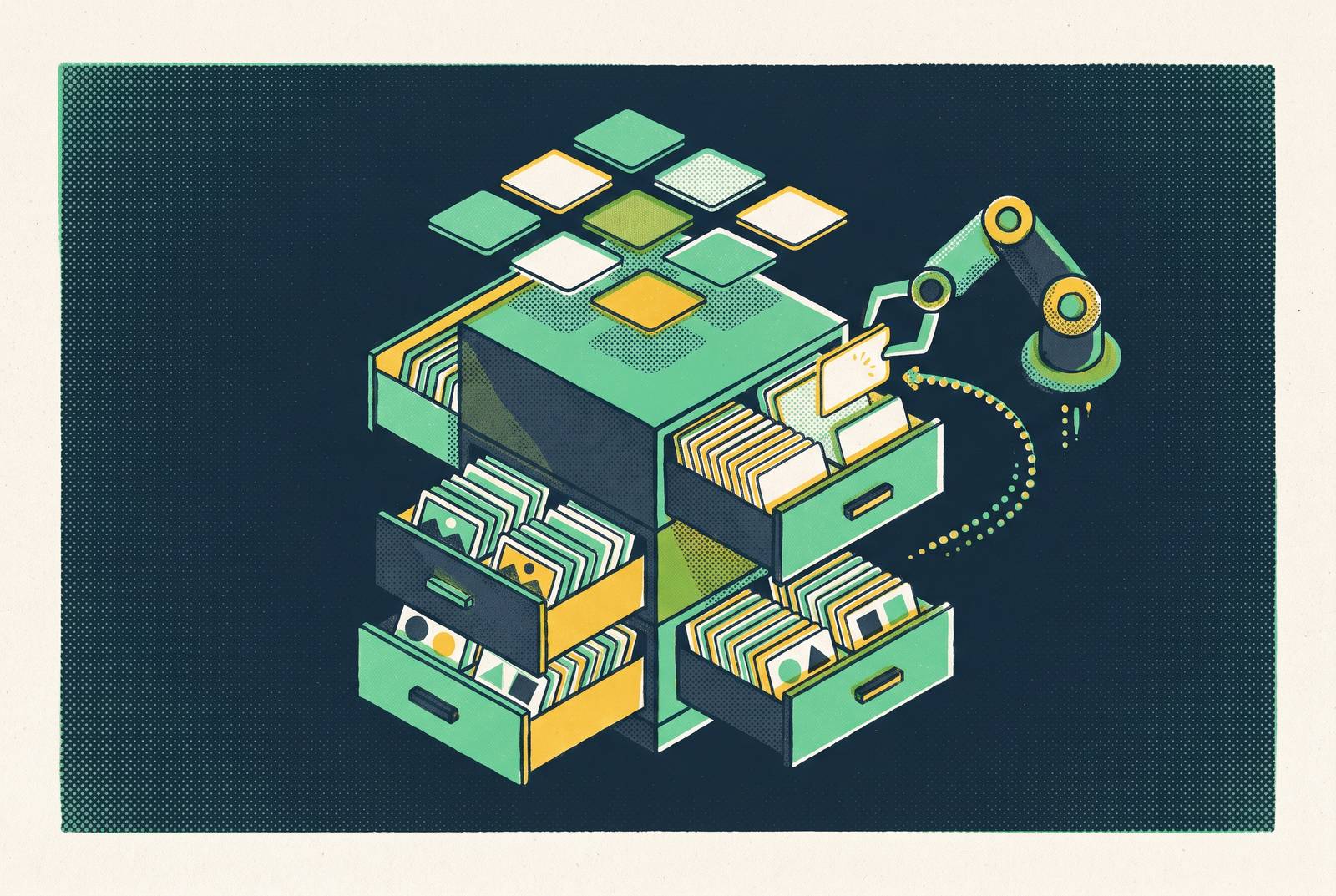
Organizing brand assets for AI agent retrieval means building the brand layer for agents, a structured, queryable source of assets, rules, and relationships that agents can use throughout a workflow. Off-brand output reflects a structural gap when brand knowledge is scattered or inaccessible. Closing that gap takes shared context, versioned updates, and checks against the same rules in place of constant manual prompting.
Why brand assets weren't built for agents to read
Generation has scaled faster than brand governance. Content production became nearly free, volumes multiplied, and creative variations proliferated, while the underlying organization of brand assets remained largely unchanged. Traditional digital asset management systems were designed for storage and retrieval at human scale. Their organization assumes that a person will locate a file, interpret the surrounding guidance, and decide whether it fits the work. An agent needs context it can access to make those decisions.
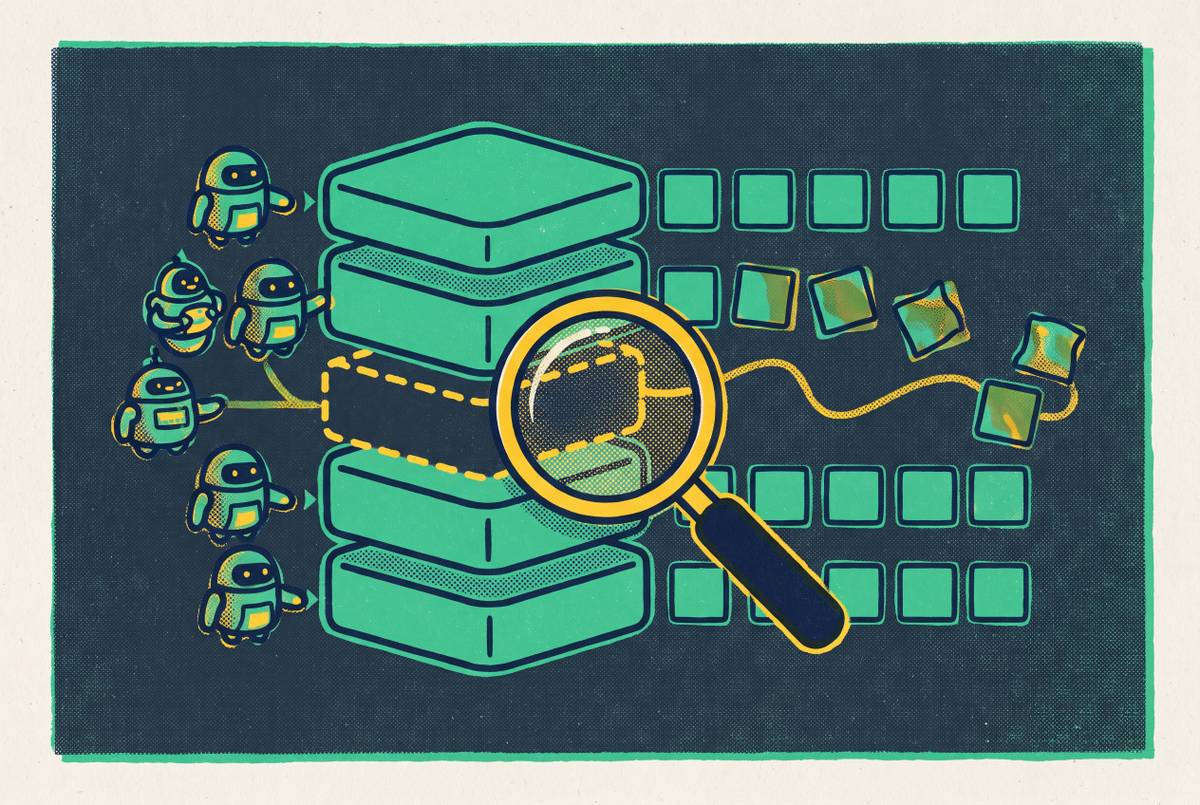
Decisions live in Slack threads, positioning in Notion pages, visual identity in static PDFs, and files in asset libraries that are kept apart. Having access to those locations is not equivalent to having structured, queryable brand knowledge. An agent needs to distinguish an approved asset from an outdated one and connect each rule to the task it governs. Scattered documents leave those connections implicit.
Assisted workflows conceal this weakness because a skilled human supplies the missing context at each step. Agent workflows remove that continuous human intervention. Without accessible brand knowledge, the agent generates from its general training, so the result tends toward a generic model mean. Better generation cannot make up for a missing structure for brand knowledge. The problem sits between what the brand knows and what the agent can retrieve.
How do AI agents stay on brand without constant manual prompting?
Agents need brand guidance expressed as constraints they can work inside. Human-readable guidelines often assume background knowledge about the business, its markets, and its channels. Machines need that knowledge spelled out and linked to the work it guides. The guidelines now serve two distinct audiences. The guidelines must be set up so machines can use them without a human having to explain their intent during generation.
The first layer is the asset layer. It contains the correct versions of logos, brand fonts, and approved product imagery as actual files that can be retrieved. Versioned availability is essential because an asset that looks relevant is not necessarily the approved asset. The second layer is the guideline layer, which expresses minimum logo size, color overlay restrictions, tone-of-voice keywords, and banned phrases in machine-readable form.
The third layer is the relationship layer. It associates images with product lines, visual styles with markets, and voice registers with channels. Those links tell the agent which assets and rules to use for a task. Without them, even an agent that can retrieve every file and guideline cannot reliably select the right combination. Reliable brand context therefore separates the files, the constraints, and the semantic relationships that govern their use.
Two formats for delivering brand context to an agent at the moment it needs it
A document that might be found is not the same as a delivery mechanism that makes the relevant guidance available when needed. The choice depends on workflow scope, the number of agents involved, and how updates must reach them. A single-agent project and a shared multi-brand workflow have different coordination needs. Two formats address those needs at different scales.
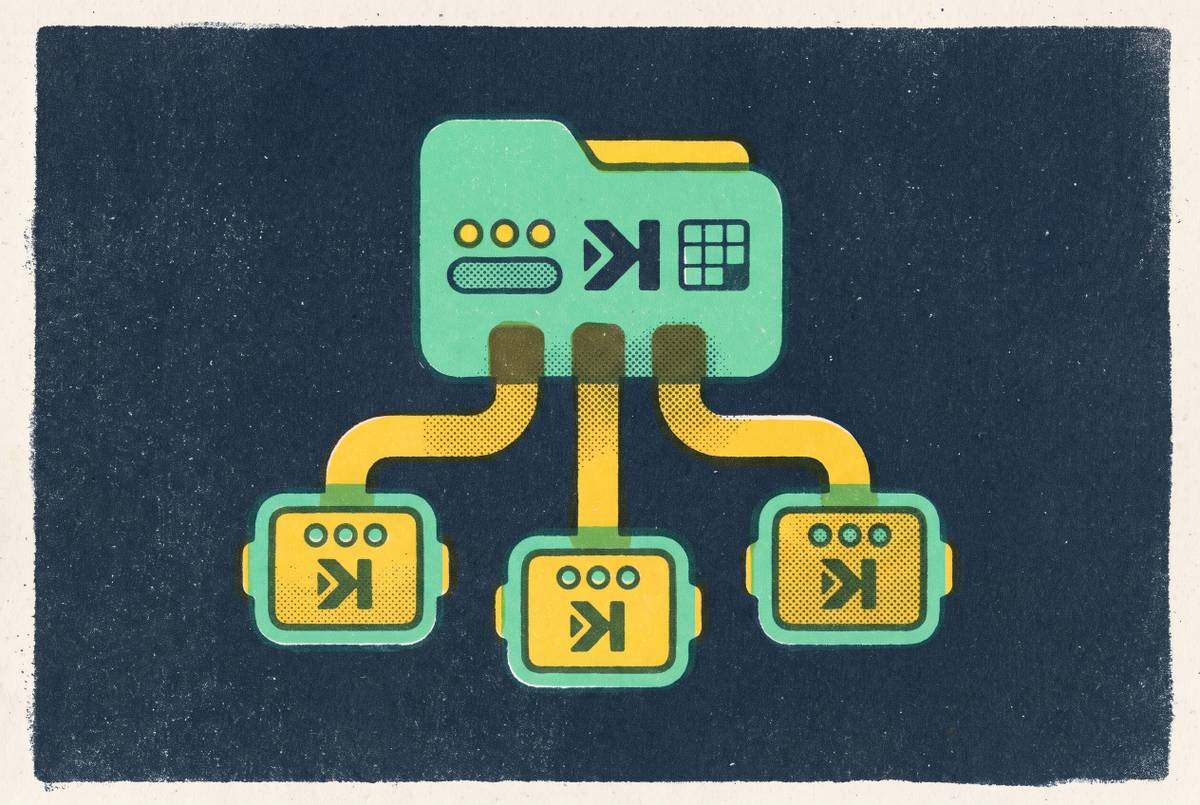
A brand.md file suits project-scoped, single-agent work where context can be loaded once per session. Its strength is a bounded scope. The file gives that agent a defined body of brand context without requiring a persistent query service. However, the context remains static within the session, and a brand change requires manual redistribution of the file. That trade-off can be appropriate when the work is contained and shared updates are not the central requirement.
MCP-based delivery places context in a persistent, authenticated, queryable system. When an agent needs brand guidance, it queries an MCP endpoint and receives a structured response rather than relying on guidance pasted into its prompt or loaded at session start. This supports retrieval at decision points throughout a workflow. It works especially well for agents working at the same time or one after another, since each can use the same source. Repeatedly pasting guidelines into prompts is a separate manual workaround, one that becomes fragile under parallel work, version changes, and growing workflow complexity.
Why MCP has become the connective standard for brand context at scale
MCP addresses coordination by exposing one authoritative source to compatible agents. A brand context server can make voice rules, visual identity, positioning, and specific do’s and don’ts available for queries during generation. The brand becomes an external source to consult. Agents no longer have to depend on isolated session-loaded copies of guidance or general training for brand-specific decisions. When several agents contribute to a workflow, shared retrieval reduces the source divergence that would otherwise pull their outputs apart.
Enterprise deployments illustrate MCP’s role as shared infrastructure. Block closely collaborated with Anthropic on the standard as a design partner and built Goose, an open-source MCP-compatible agent its employees use daily. Adobe Marketo Engage launched an MCP server with operations across forms, programs, smart campaigns, people and leads, emails, snippets, lists, and folders. These examples establish internal and marketing uses for the connective approach. They are evidence of deployed infrastructure, rather than demonstrations of brand-specific performance.
The efficiency objection deserves a direct answer. Independent benchmarks have reported that a CLI approach can complete equivalent tasks with fewer tokens and better reliability than MCP. Token cost remains a legitimate design criterion for brand context delivery, whose primary purpose is to keep decisions consistent and governed across agents. For that workload, the decisive benefit is reliable access to a shared source of truth.
Keeping brand context current when the brand itself changes
A shared source becomes a liability if it stays accurate only to the day it was created. A rebrand, product rename, or campaign pivot can make previously valid instructions wrong. Every connected agent may then get the same out-of-date guidance. At AI production volumes, an old logo, deprecated color, or retired tone instruction can propagate across the work until the source is corrected.
The appropriate model treats brand identity as a versioned system, much like code. A change is made at the source, and connected agents or products pick up the new version instead of relying on prompt updates distributed across teams. This makes maintenance part of the infrastructure. It also changes the role of a brand update from a document handoff to a controlled change in the context used for production.
Versioning also makes review more precise. A reviewer can establish which version of the brand context informed an output, rather than assuming that today’s guidance was available when it was generated. That distinction connects the history of the rules to the history of the work. It provides the basis for an audit of generation against the applicable brand context.
Reviewing AI-generated output against the brand before it ships
With structured context, finished work can be checked against the same machine-readable rules used to generate it. Instead of asking a person to compare an output with a PDF and reconstruct the relevant guidance, review can use explicit constraints. This changes what a brand check can establish. A finding can identify the rule that flagged, the asset version compared, and the specific deviation. Review gives evidence that can be traced, going beyond an unsupported sense that something feels off-brand.
Governance by design puts those constraints to work as content is made. Voice rules guide the agent as it writes, taking the place of preferences shared only after there is a draft. The aim is on-brand construction, with review confirming adherence instead of serving as the first encounter with the rules. Review remains part of the process. Its connection to generation is what makes governance continuous.
That connection also addresses a cause of shadow AI. Individual contributors may make brand content outside governed workflows when the approved path takes too long. If review comes only after generation, people still have that reason to bypass it because governance feels like another wait. When brand context is easy to access and makes the governed path the easiest one to take, shadow AI loses its main cause. Generation and review then operate as one continuous system because both draw from the same brand context.
How multi-brand and agency workflows expose every gap in the structure
Each brand has its own guidelines, but teams may work with several identities at once. Without structural separation, Brand A’s color palette can appear in Brand B’s campaign even when both palettes are individually approved. More access does not resolve that ambiguity. An agent needs to know which brand’s context governs the task.
The design principle is one source of truth per brand. One profile group must hold the color palette, font family, tone guidance, and AI-ready brand context for its brand. Otherwise, agents have to assemble an identity from sources that may not agree. In a multi-brand platform, separate agents can work on specific brands, customer journeys, or use cases while a central team keeps their strategies in step. For that to work, the context structure must keep brands apart even when teams fail to do so themselves.
The relationship layer becomes especially important under these conditions. It binds the task to the correct brand profile and connects that profile to the relevant market, channel, product line, and assets. Retrieval can then select by business context. The same requirement applies when an agency coordinates work across brands and teams. Multi-brand operations use the same underlying principle as a single-brand workflow and make the consequences of skipping it harder to avoid.
What it looks like to build a queryable brand context layer in practice
For practitioners, implementation starts with an audit of existing brand knowledge. The work is to catalog what lives in PDFs, Slack, Notion, and asset libraries, then distinguish machine-readable material from human-only guidance and missing context. This is more than a file inventory. It establishes whether an agent can retrieve the knowledge required to make a brand decision. Those gaps define the restructuring work.
The next step is to express guidelines as usable constraints. Brand positioning needs to be set out in structured language, tone needs clear principles, and visual guidance needs references an agent can use to explore ideas through generation. Lists of banned terms and specifications for approved palettes turn descriptions into guidance an agent can use. The relationship layer then maps assets to the product lines, markets, channels, and brands they belong to.
Delivery should follow the scope of the workflow. A brand.md file fits project-scoped single-agent work, while MCP-based delivery fits multi-agent, multi-team, or multi-brand operations where shared context and updates take priority. Review should then connect to the same structured source. Its checks need traceable evidence so that governance remains connected to production rather than becoming a final gate detached from generation.
This is ongoing infrastructure work. Its success is measured by whether every connected agent draws from the context layer, every brand update propagates through it, and every piece of AI-generated output can be checked against it. Maintaining those conditions is the ongoing task. A repository of guidelines becomes a brand layer for agents only when it participates in the work.