Wiring a Live Brand Context API as the Single Read Source Across Every AI Product Your Agency Ships
A live API replaces scattered brand rules with one shared source for all agents.
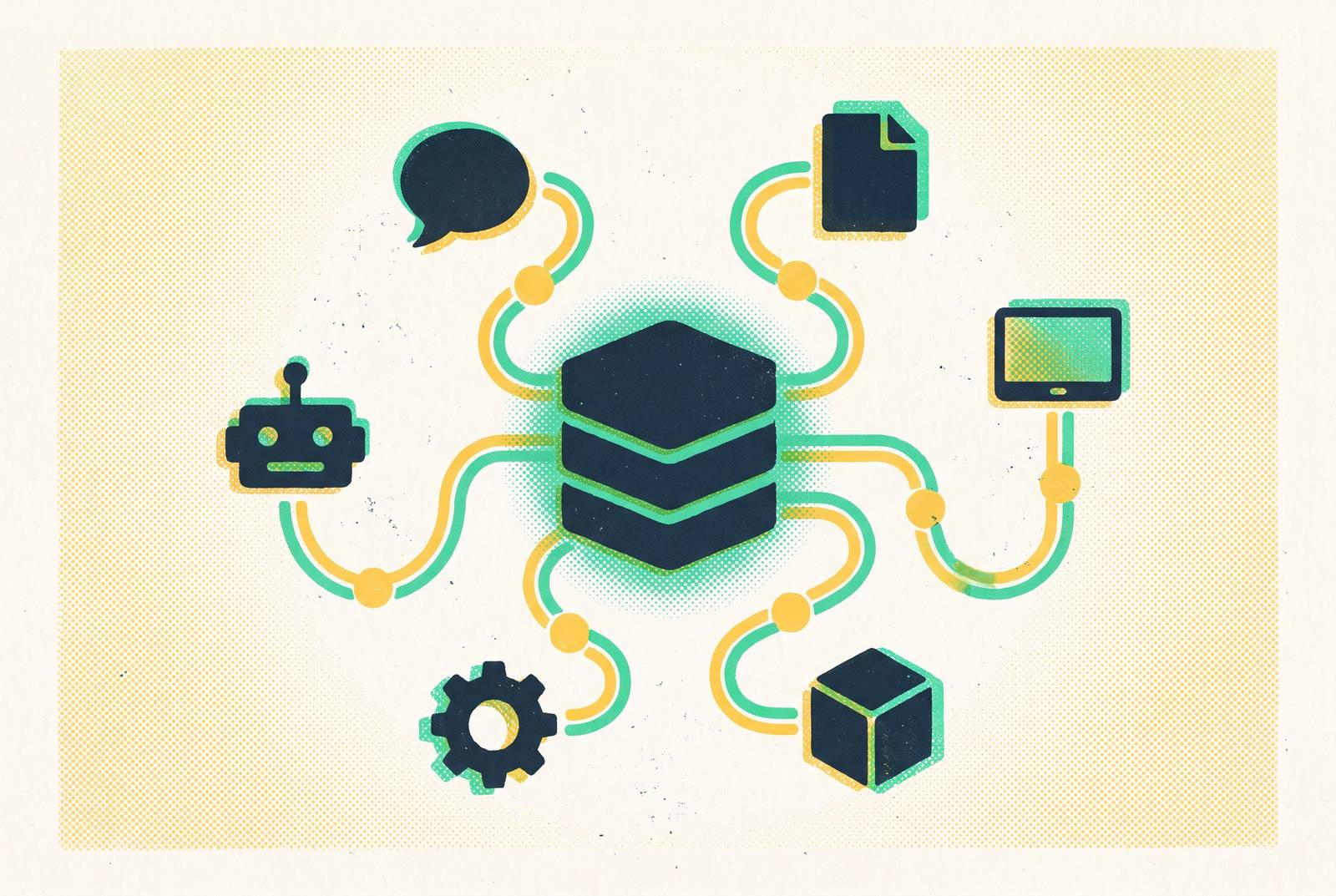
A brand context layer for AI agents and products is a structured, versioned source of brand rules that every connected tool reads at task time. Wiring that layer through one live API endpoint replaces isolated prompt copies with shared infrastructure. For agencies, the structural guarantee is consistent access to the same approved context, with separate access boundaries for each client and review against the rules used to generate the work.
Why prompt-based brand management breaks at agency scale
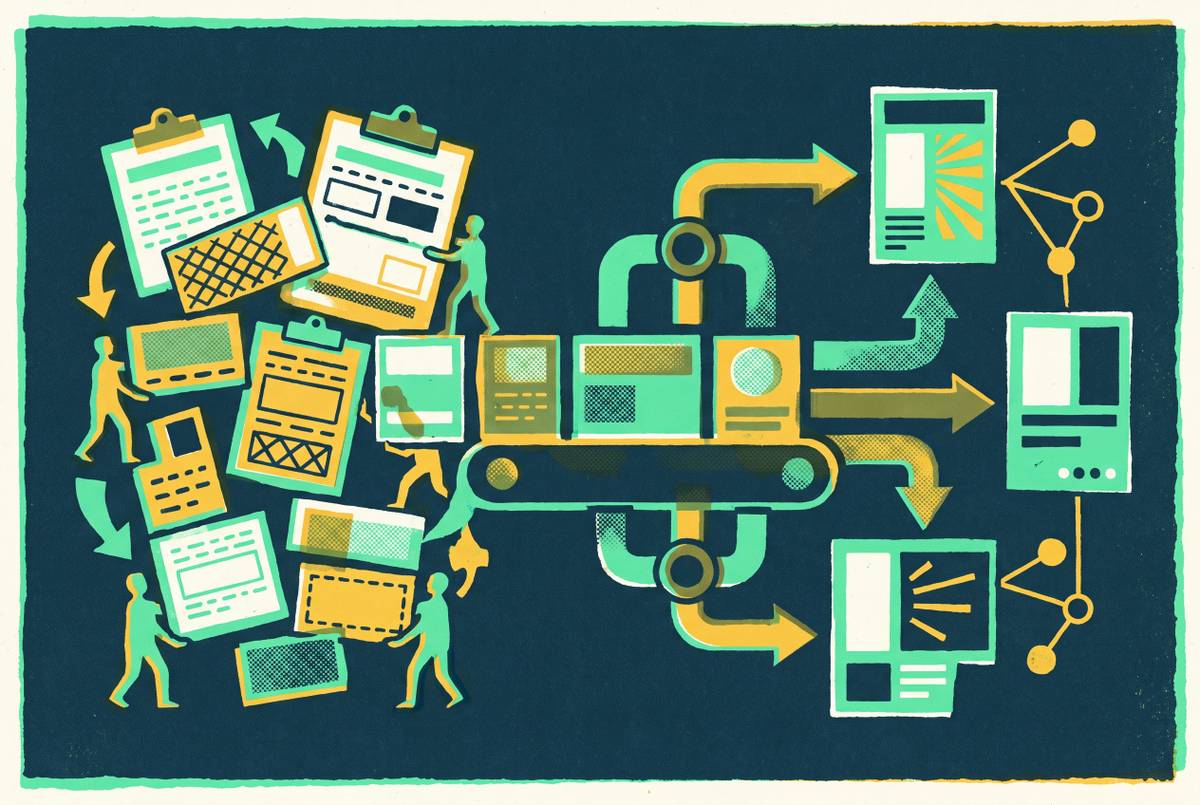
Brand knowledge scattered across Slack threads, Notion pages, and static PDFs gives agents no dependable operational source to query. A person can reconcile those materials into a brief, but that work must happen again whenever another agent or team needs the context. Each handoff creates another opportunity for omission or interpretation. The problem compounds in a multi-agent workflow, where agents operating in parallel or in sequence each need the relevant brand rules.
When a voice rule or visual direction changes, teams must update every affected template and workflow by hand. Those copies do not version themselves when the brand changes. For an agency with several clients, teams have to keep prompts up to date across brands and products, and each project's prompts are separate from the others.
The resulting failure is visible in the work. Asked for “a confident professional in a modern office,” a model without brand context defaults to a statistical average, producing the polished, stock-style image available to countless other brands. Even when feedback improves the work, a generic tool does not keep that brand knowledge for future tasks. The reference, reviewer preference, and favored crop do not become a shared foundation for the next task.
What a machine-readable brand actually is, and why the distinction matters
A machine-readable brand represents strategy, voice, and visual rules as structured data that AI tools and content systems can query. The distinction is more exact than file format. A guideline document might say “our tone is warm and direct,” while a schema represents tone as a field with a value, source, confidence score, and timestamp. An agent can then retrieve the rule directly.
The emerging formats serve different operational needs. Brand Context Protocol (BCP) uses JSON Schema Draft-07 to structure identity, visual specifications, verbal rules, positioning, restrictions, and governance. Its API and MCP connections fit marketing processes that need controls to check tone, vocabulary, claims, and pricing rules. By contrast, brand.md uses Markdown with YAML front matter to package strategy, voice, visual guidance, and governance into a portable project file. That portability has limits when many audiences or continuously updated contexts must be combined.
Brando Schema extends Schema.org's Brand type with properties, relationships, controls, and references covering brand identity, governance, content specifications, and assets. These approaches differ in scope, but each addresses the need to make brand knowledge explicit. Structured data is the prerequisite for the next layer. A versioned content API gives agents live, timestamped answers about brand rules from that data, so they no longer have to rely on text that is incomplete or out of date.
How MCP turns a brand schema into a live, shared read source
Anthropic introduced the Model Context Protocol (MCP) as an open standard for secure, two-way connections between data sources and AI-powered tools. Developers make data available through MCP servers, and AI applications connect as clients. This changes the integration burden from a multiplication problem to addition. Instead of building a separate connection for every application and system pairing, a system exposes a server usable by compatible clients.
A brand MCP server separates its capabilities into resources, tools, and prompts. Resources provide read-only data such as voice guidelines, visual specifications, and approved asset references. Tools let agents get campaign briefs, check assets against rules, or compare drafts with voice standards. Prompts supply reusable instructions for approaching brand-sensitive tasks.
The server controls which brand information it exposes and how that information is structured, avoiding HTML parsing and uncertain retrieval from public pages. MCP is now a Linux Foundation Agentic AI Foundation (AAIF) standard supported by OpenAI, Google, and Microsoft, while Webflow ships its own MCP server. Block was among the early enterprise adopters, integrating the protocol to build agentic systems across its organization. That adoption provides an enterprise signal for the transport, while correct design of the brand context remains a separate requirement.
The single-endpoint architecture and what it actually guarantees
Shared brand context is the static layer, defined once and inherited across workflows. Static here describes its shared role, which allows updates. Context folders are the dynamic layer: they hold task-specific documents and data that load at runtime and can change without changes to the workflow.
Every connected product reads the shared layer from the same live source. When a voice rule, color token, or imagery direction changes, the endpoint publishes the new version, so teams no longer have to fix prompt copies spread across their tools. Parallel agents each query the same brand context server on their own. Their access to consistent rules therefore depends on the architecture.
The guarantee concerns the source of context. It stops conflicting prompt copies from causing drift, but review is still needed to check whether generated work follows the rules.
Context cost also constrains the design of that source. Each connected tool describes its schema to the model, so too many capabilities can use up a lot of context before a task begins. The endpoint should expose only what agents need. A shared source need not become an indiscriminate data dump.
How do agencies keep each client's brand context separate?
A multi-brand platform needs a hard boundary around each brand's data and behavior as well as different brand names and color schemes. Without that boundary, a question about Brand A's return policy can receive Brand B's answer. A common tone can also flatten distinct voices, while conversations pooled into one reporting bucket prevent useful client-level analysis.
The underlying model can remain the same across clients. The system prompt, tone configuration, policy rules, and data scope must differ by brand, without requiring different model weights. Governance boundaries must keep customers' data, conversation history, and agent behavior from bleeding into another brand's experience.
Each client has its own versioned context endpoint, and agents query it with brand-scoped credentials. Brands share the platform infrastructure, but each has its own separate context. A common platform team can maintain that infrastructure, but each brand still needs a named owner for tone, policy exceptions, and regulatory sign-off.
This separation also defines the relevant software criterion. Agencies need a system that manages several brands through one interface while preserving hard separation between them. Requiring separate tooling for every client is not equivalent to a shared platform with isolated context. Beyond five clients, the case for centralization rests on those repeated update and handoff dependencies.
What versioned brand context changes about the review and approval workflow
Structured context gives review an explicit reference. Agents generate from the brand endpoint, and finished work is evaluated against the same rules before release. Each check can have evidence tied to the schema the agent read, rather than depending entirely on a reviewer's recollection. This closes the loop between the source of generation and the source of approval.
The benefit is particularly clear at handoffs. Campaign images, web pages, launch decks, and email each have constraints that are hard to check by hand when teams produce a lot of work. Once those constraints are encoded as data, they can support programmatic comparison. Human judgment need not disappear, but it no longer has to reconstruct the whole brand from memory before assessing the work.
Superside reports that customers who use custom brand-trained models and persistent brand memory spend much less time per image and keep variations consistent with the brand. The case supports the value of retaining brand context across production, rather than treating each generation as a fresh start.
Versioning makes changes accountable as well as available. Brand identity should be updated like code, with previous versions retained and new versions published for connected agents and products. A traceable change differs from silently overwriting a shared document. It also gives review a defined reference when the brand's rules evolve.
Wiring the architecture in practice: from brand files to live endpoint
A team adds a website, brand guide, or other files, and the system extracts identity, visual specifications, and verbal rules into a queryable schema. The goal is not merely to store the files centrally, but to expose the rules within them as structured data.
The next layer exposes that schema through MCP for agents and REST API for products. Claude, ChatGPT, Claude Code, Cursor, Codex, and other MCP-compatible tools connect to the brand server and query context at task time. Teams that build their own AI products use the API to bring in the same context. These are two access paths through which external and embedded agents share the same brand source.
Task-time retrieval should return a scoped brief. Rather than sending every rule to every agent, the endpoint turns the task into guidance covering the relevant logo, type, colors, imagery, and voice requirements. Campaign images and email can then have different briefs that use the same definition of the brand.
Remote MCP servers use Streamable HTTP, replacing the older server-sent-events approach, and OAuth 2.1 provides the authorization standard. For agencies, that authorization must enforce brand-scoped access. An agent working on Client A's campaign must not be able to retrieve Client B's context.
A tool returning a task-scoped brief consumes less context than a resource that sends the entire schema on every call. The server should expose capabilities at that useful granularity. When a logo, voice rule, or imagery direction changes, it publishes a versioned update that connected agents and products pick up without manual changes to prompt templates. Review completes the implementation by comparing finished work against the brand context used to generate it.
What agencies should expect as a baseline once this infrastructure is in place
Account teams add a new client brand to the infrastructure once, rather than distributing guidelines across every tool and prompt template used for that client. Copy, image, deck, page, and email agents then draw from the same governed source. The account team maintains the brand definition.
That shift makes consistency easier to inspect. A missed guideline in a local prompt is no longer the expected cause of disagreement between connected workflows. Attention moves to whether the shared context is correct, properly scoped, and applied by the output. Finished work can be checked against that source with evidence, rather than requiring a reviewer to hold the full schema in memory.
Most foundation image generators and copy tools do not retain or enforce brand context across generations. The endpoint closes the continuity gap by making context available as part of each task. Governance still has work to do, including ownership, updates, isolation, and review. Its leverage comes from operating on the shared layer.
Brand context then occupies the same architectural role as a shared API in an engineering system.