Replacing Manual Prompt Pasting in Agency Teams
Brand infrastructure needs a fixed address, not screenshots in old chat messages.
Manual prompt pasting fails agency teams for a structural reason: brand context has no fixed address, no shared state, and no way to survive a closed tab. A new hire asking where the brand voice guidelines live gets pointed to a screenshot of a message from a team chat app sent back in March. This piece lays out what agencies need if they want agent-ready brand infrastructure, and what changes when a system, not a person, has to carry the brand context.
Manual prompt pasting is a structural problem, not a habit problem
The pattern repeats across agency teams every week: someone opens a chat window, pulls context from a shared doc, pastes it in, generates the output, and closes the tab. The work disappears with the tab. Nothing about that cycle is a discipline failure that a reminder or a template could fix, because the tools themselves are built in a way that produces the habit.
Each AI tool functions as a walled garden. Prompts, voice references, and specs sit inside one chat history, and no teammate can check or query them later from anywhere else. Moving that context between tools means copying and pasting by hand, which truncates long documents, mangles formatting, and forces whoever is doing the work to re-explain the brand from the beginning, every time, in every tool. A prompt refined over an afternoon of trial and error becomes something only one person knows how to reproduce, and that knowledge lives in a direct message, out of reach of the rest of the team. Onboarding a new team member to that prompt means someone has to go find the message, and more often than not, what gets handed over is a screenshot of a conversation that happened months earlier. That is not a workflow. That is an unwritten rule passed by word of mouth, and it breaks the moment the one person who remembers it goes on vacation.
What brand drift looks like when it compounds across a campaign
A single well-crafted prompt can produce a genuinely strong output on its own, so it's easy to miss the deeper problem. This gap appears at the campaign level, when multiple contributors each generate assets from their own slightly different version of the brand context, and nobody notices the gap until the assets sit next to each other.
The drift is cumulative. Another's says "direct and approachable." Neither is wrong on its own, but across thirty pieces of content for one campaign, the tone starts to wander, and by the time someone reviews the full set, the brand reads like three different companies took turns writing it. For agencies managing several clients at once, the stakes rise further: pulling a font pairing or a voice reference meant for one client into a deliverable for another is the kind of mistake that damages an account relationship on the spot, and in regulated industries, it can create real compliance exposure. If a financial services client's output picks up language patterns tuned for a consumer retail account, that isn't a stylistic quirk; it's a review flag waiting to happen. Even agencies that have already moved past individual ad-hoc pasting and built shared prompt documents run into a version of the same ceiling: a shared doc is still a static file, and static files produce generic output once more than one person is pulling from them without a shared, structured source to coordinate them.
What "foundation" means before any agent or workflow is activated
The most common reason agentic workflows produce inconsistent output is that the brand context fed into the system was never structured properly in the first place, before any agent was turned on. Agents don't manufacture inconsistency out of nothing. They inherit it from whatever they're given to work with, and if that input is thin or scattered, the output will be too, no matter how capable the model is.
A proper foundation includes brand voice described with real examples, not adjectives, a full picture of the ideal customer, a strategic narrative explaining what the brand is trying to say and why, a taxonomy for how things are categorized and named, and a library of the actual language customers use. Skipping that step and going straight to automation produces fast output that decays fast. Generation speed outpaces the stability of whatever is being generated, so the problem doesn't announce itself in week one. The gap between contributors' interpretations spreads over about three weeks, and the problem becomes visible once that spread shows up in the assets. Brand identity also has to be built for a machine to use, not just for a person to read. A PDF style guide works fine if a designer is just flipping through it at a desk. It does nothing for an AI agent that needs to query specific, current information and act on it in real time. Rainbrand converts existing brand assets, guidelines, files, websites, design systems, into versioned, retrievable Brand Skills that agents can consume and apply through an API or through MCP, treating brand context the way an engineering team treats code: something versioned, something retrievable, something that updates in one place and propagates everywhere else automatically.
MCP as a Stable Address for Brand Context
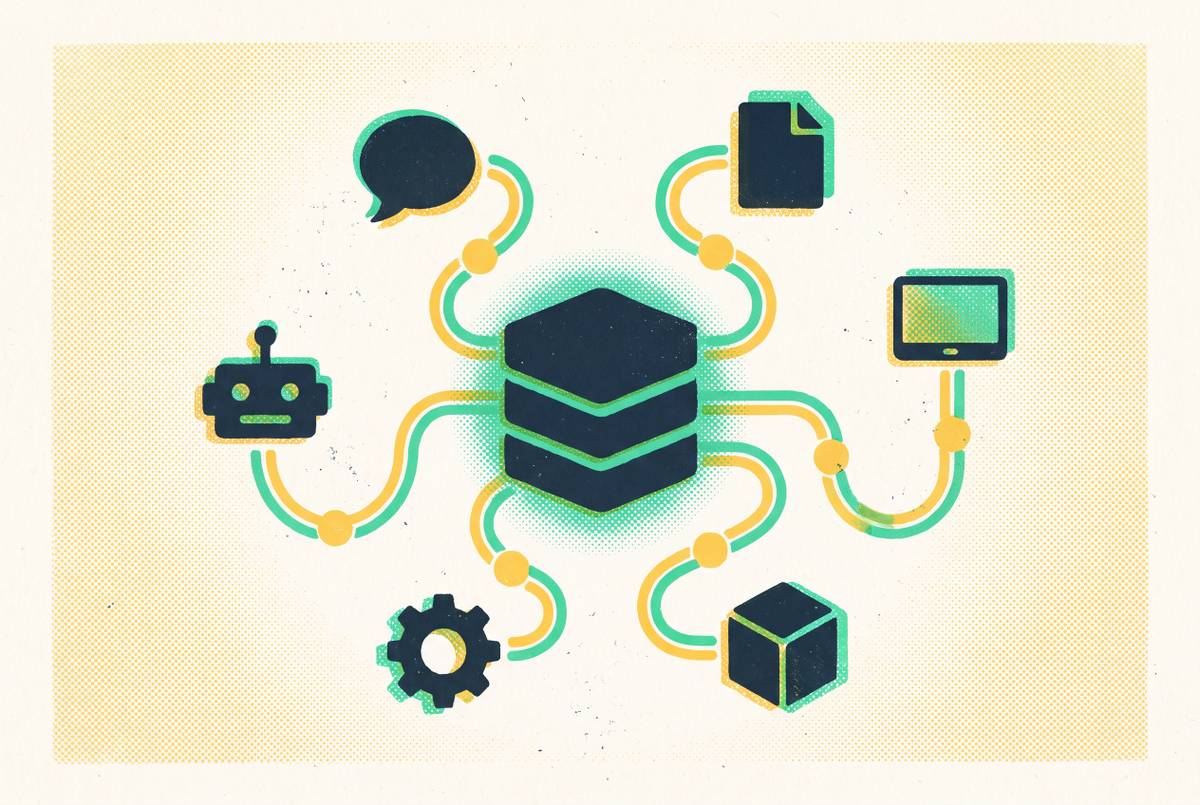
Brand context can now live outside any single chat window because of Model Context Protocol, an open standard that lets AI tools request structured data directly from external systems instead of requiring a person to paste it in by hand. Without it, an AI tool has to guess at brand voice based on whatever patterns it picked up in training. With it, the tool references the team's actual, current style guide: no copy-paste, no re-explaining the brand from scratch, no starting over because a session reset.
The same gap closes for campaign history. Without MCP, an agent has no memory of what's already been approved and no way to check it. With MCP, it can query both by name, the same way a person would look something up in a shared drive. The protocol's reach is already well past any single vendor's product. Anthropic donated MCP to the Linux Foundation, with Block and OpenAI as co-founders and AWS, Google, Microsoft, Cloudflare, and Bloomberg among the platinum members, which signals the protocol is heading toward becoming shared infrastructure across the industry. Rainbrand exposes brand context through MCP, so Claude, Cursor, ChatGPT, and any MCP-compatible environment can query a team's actual, current brand voice and assets by name. You don't need manual pasting, a session reset, or tribal knowledge sitting in a direct message somewhere. For example, in daily use: Notion and Google Drive MCP servers let an agent pull the ideal customer profile document, the brand voice profile, and the content calendar by name, the same way a person would open a specific file.
What a workflow looks like when brand context is shared infrastructure rather than tribal knowledge
Once brand context has a fixed address that any tool can query, the entire shape of the work changes. It becomes a chained system where every agent in the pipeline draws from the same source, rather than a string of separate paste-and-generate sessions.
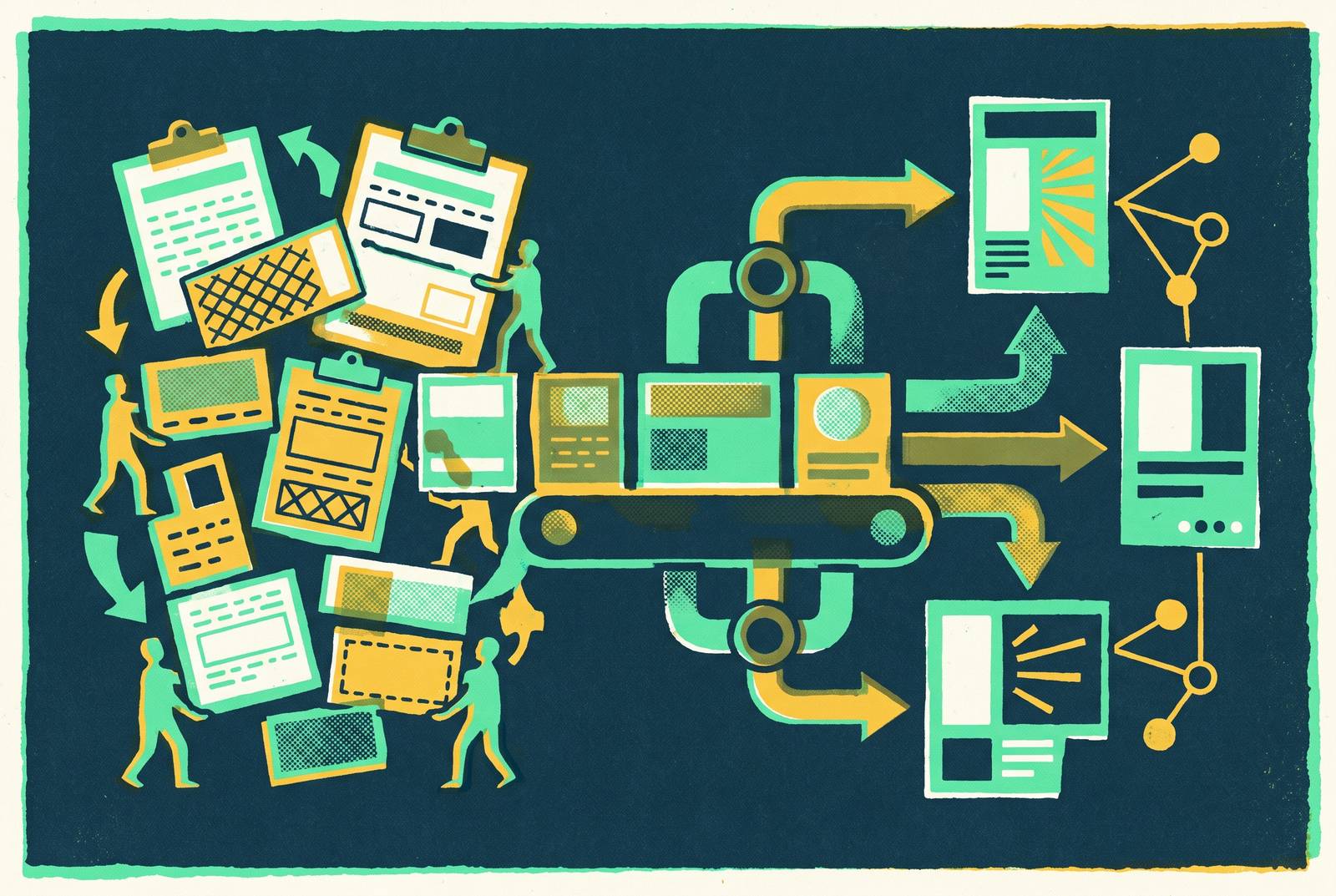
Take a single brief that has to become a blog post, an email, social copy, and ad copy. If you want all four outputs to sound like the same brand, every generation step has to pull from identical brand context. One prompt, however well-written, can't hold that consistency across four different formats, so a structured workflow has to do the coordinating. Within that kind of system, agent roles start to separate out into distinct, checkable jobs. A Brand Voice Governance Agent reviews generated content before it ships, flags anything that breaks from the established voice, scores how well it fits, and recommends whether to ship it, revise it, or rebuild it from scratch. It doesn't rewrite anything itself. It governs. A Content Strategy Agent produces the initial brief, and it then flows into a production workflow that runs brand governance checks and SEO checks, with human review built in at specific points along the way. The leverage comes from the workflow connecting these pieces, not from any single agent working alone: agents in isolation produce output, and workflows produce outcomes a team can actually rely on. If an agency juggles several client accounts, this is where the workspace model earns its keep. Rainbrand's workspace structure lets a team manage an unlimited number of brands in one place, with each brand's context kept fully separate from the others. So if someone pulls Client A's voice references into Client B's workflow, the infrastructure itself stops that mistake, instead of leaving it for someone to catch in a review pass after the fact. And when a brand's guidelines change, every downstream agent and every connected tool inherits the update automatically, with no re-pasting and no risk that one teammate's chat history is still running off an older version.
None of this removes human judgment from the process. It reallocates it: human attention moves away from re-explaining brand context for the hundredth time and toward the decisions that need a person's judgment behind them.
Agencies operating cleanly through this shift in 2026 tend to treat it as a clear division of labor: agents and automated workflows run the production pipeline, while editorial judgment and anything client-facing stays firmly in human hands. Certain actions get defined as human gates from the start: campaign launches, budget changes, list exports, customer-facing sends. These require a person's sign-off no matter how reliable the underlying brand context has become, because the cost of a mistake at that stage is too high to automate away. The Brand Voice Governance Agent fits this model exactly: it flags issues and scores content for fit, but a human still decides whether something ships, gets revised, or gets rebuilt. The agent's job is to cut down how much mental effort that decision takes, not to make the decision disappear. On the security side, the conservative approach for MCP deployments is to start with read-only access, reporting, knowledge search, draft generation, and add write permissions gradually as trust in the system builds. That's also the right model for how brand context itself should be handled: agents read from the canonical source, and humans are the ones who update it. The human role gets more strategic as the infrastructure matures. Less time goes toward tracking down the right version of a prompt, and more goes toward the judgment calls that decide whether a campaign lands.
The practical starting point for teams currently living in the paste-and-generate cycle
Moving out of the paste-and-generate cycle is a sequence, not a single tool purchase, and the order matters as much as what gets chosen at each step.
Step one is building the foundation before turning anything on: structure the brand context properly first, voice exemplars, the ideal customer profile, the strategic narrative, the asset library, before connecting a single agent or workflow. If you skip this step and jump straight to automation, you get generic output faster, but not consistent branded output faster. Step two is settling on one canonical source: a single brand context that every agent and every team member pulls from, rather than per-person prompt documents or per-project folders that drift apart from each other within a few weeks. Rainbrand's Brand Skill is built to work as exactly this kind of layer: it takes in existing brand assets and makes them queryable through an API or through MCP. Step three is connecting the tools the team is already using day to day: Claude, Cursor, ChatGPT, and other MCP-compatible environments can pull brand context directly once that context has a stable address to query. The actual shift, from pasting to querying, happens at that connection point, not by asking a team to abandon tools they already know how to use. Step four is setting the human gates before any agent goes live in production: deciding which outputs need human sign-off, which can run on their own, and what triggers an escalation back to a person. That design work needs to happen before deployment, not after the first visible mistake makes the need for it obvious. For agencies managing multiple clients, step two carries an added requirement: each client's brand needs its own isolated workspace, and the rules for who can update that context, and when, should mirror however the agency already handles client-specific approvals elsewhere. What changes by the end of this sequence is where brand context sits. It becomes something the infrastructure holds and serves instead of something each person carries around and re-explains on demand, which is what frees the team to spend its attention on judgment instead of on retrieval.