Brand Standards as a Shared Dependency Product Teams Pull Not a Rule Set They Push to Each Agent
Shared brand context resolves at runtime when agents pull it like software dependencies.
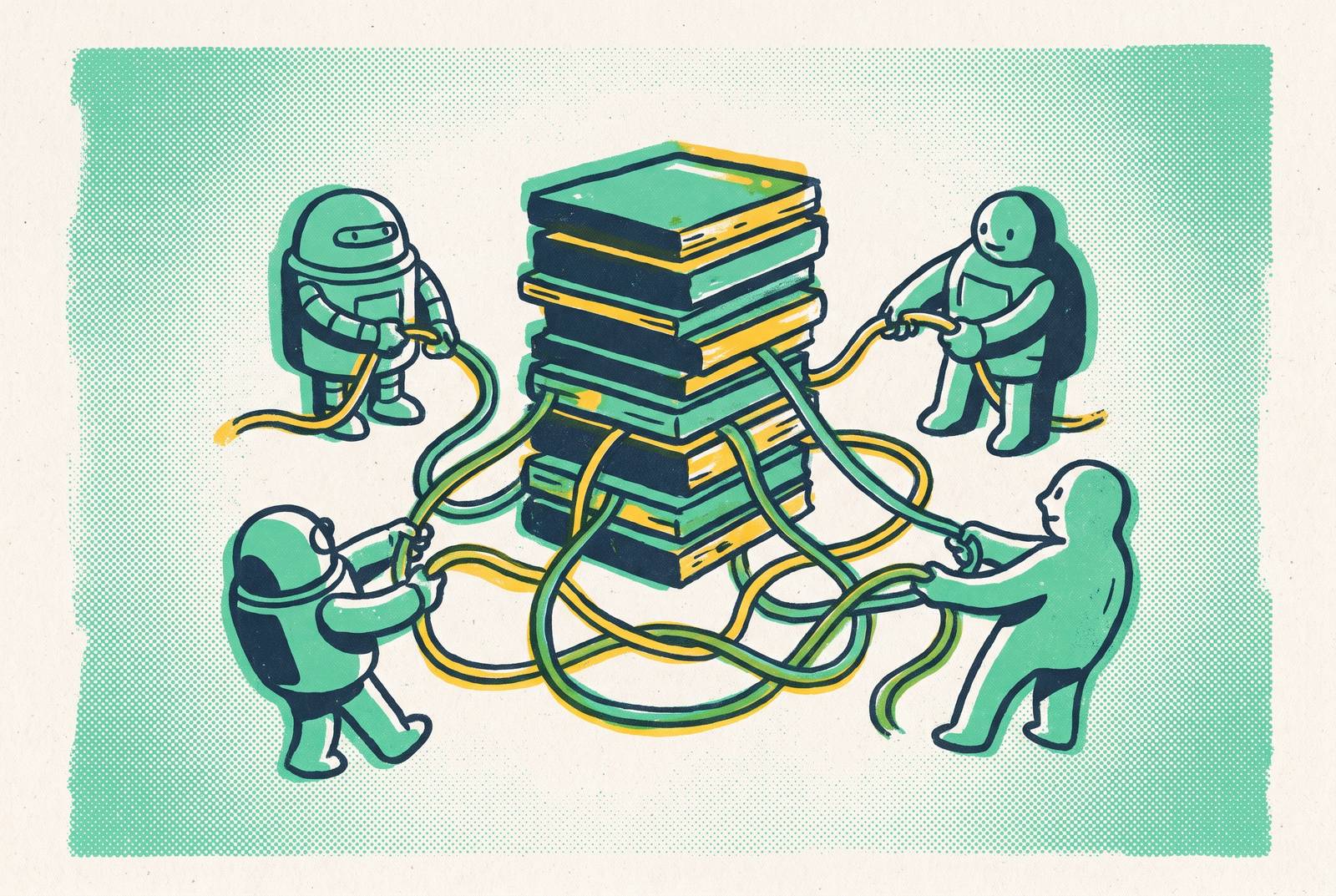
Brand standards scale in agentic workflows when they become a shared dependency. A brand context layer for AI agents and products must provide structured identity, explicit rules, and a single versioned source that consumers resolve automatically. This architecture prevents handoff drift by making the applicable brand context a property of the workflow rather than something a person must remember to supply.
Why brand standards break down when agents enter the workflow
In traditional brand governance, a few trained people stood between the guidelines and the output. A copywriter internalized the voice, a designer knew the visual system, and an agency worked from a brief. Review caught departures from that shared understanding. Agents have no equivalent institutional memory between sessions. They work with the context available at the moment of generation, so knowledge held by the team does not automatically reach the system producing its next piece of work.
Without sufficient context, an agent approximates from training data. The failure is often difficult to see. An output may be plausible but slightly wrong in tone, color, or register, and hundreds of these small departures accumulate across tools and teams. At the scale of thousands of daily brand touchpoints, review becomes a chokepoint because creation outpaces the queue. The structural failure is therefore upstream of the reviewer, where the workflow depends on humans to supply context for every new session.
The push model: why re-injecting guidelines into every session does not scale
The dominant workaround is to paste guidelines into prompts or system instructions. When a team changes tools, someone re-enters voice preferences, explains logo rules again, and reconstructs the context that the previous tool received. Each handoff becomes another opportunity to omit a constraint. This is the push model of brand governance. It resembles copying a library’s source code into every software project that needs it, leaving each copy to be maintained separately.
Those copies also compete with the documents around them. Brand information may be scattered across Figma, CMS platforms, Notion boards, Confluence, and decks without a clear indication of which source wins. If an agent can access an old presentation, it can bring outdated positioning back into use. Availability is not the same as authority. When several documents describe a product differently, the agent lacks a dependable basis for choosing the approved description.
Better wording in a single prompt cannot settle that conflict for the whole organization. Nor can it update every copied instruction when the brand changes. Governance must therefore move beyond whether an output appears on-brand to which data, rules, and sources determined it. That shifts control toward the point of generation. Review can still detect errors, but it cannot repair the distribution system that keeps supplying inconsistent inputs.
What the dependency model means in software and why brand context fits the same pattern
Software dependency management separates a declaration from the code it refers to. A project declares its dependency in a manifest, resolves it from a registry, and replaces its independently maintained copy with a versioned source. Projects can then pull updates without someone having to edit the library by hand in each one. The registry supplies a common point of reference. Copying source code removes that relationship and leaves projects to diverge as their local copies change.
Brand context fits the same pattern directly. The brand guideline is the library, while agents and products are the projects that depend on it. A session-level system prompt containing copied guidelines behaves like a copied source file. Its maintenance remains local to the consuming tool. With a declared dependency on shared, versioned brand context, though, each consumer can resolve the rules that apply at runtime.
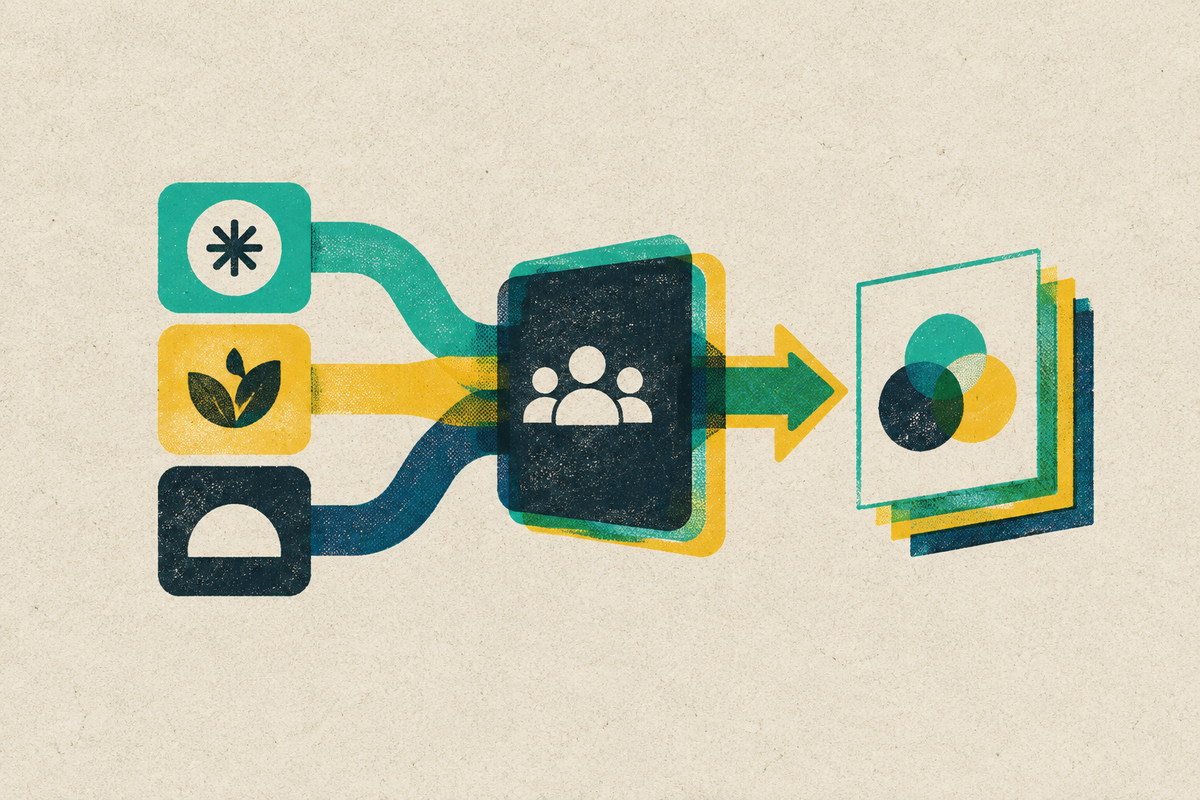
The analogy changes where governance work belongs. Instead of relying primarily on documents and downstream inspection, governance defines the inputs, context, rules, and boundaries within which creation occurs. The old sequence moved from design to documentation to building. The dependency model extends that sequence through structured data, distribution, building, governance, and improvement. Documentation remains useful for people, but the operating system for brand production becomes the shared context that agents can actually retrieve and apply.
Making brand identity machine-readable: what structured brand context actually requires
A PDF presents guidelines for a person to interpret. A shared dependency must expose values and rules that a machine can resolve, which requires more than placing the same PDF in a central folder. Rules for color become structured design tokens, and component libraries take the place of screenshots. Structured content models need to replace Word documents. Metadata and taxonomy take the place of loose naming conventions, and knowledge that only experienced team members hold becomes rules that are spelled out.
The gap is semantic as well as technical. A human designer can read a primary color’s hex code and understand its role in the visual system. An image generator may encounter that code as an arbitrary string and default to associations from its training data. The value needs meaning attached to it. Structured context must express both the brand’s identity and the implementation details needed to render that identity.
Neither layer is sufficient on its own. Implementation specifics without identity can produce technically correct work that feels off-brand, while identity without implementation specifics leaves an agent unable to render the intended result. Version-controlled JSON design tokens provide a shared source for visual values that consuming agents can read when those values change. Semantic context supplies the purpose those values serve. Shared file access must enable humans and agents to understand and consistently apply the same standards.
How MCP turns shared brand context into something agents actually resolve at runtime
Model Context Protocol provides the resolution layer between structured brand context and the agents that need it. A file on a drive is only a potential input until the workflow retrieves it. An MCP connection gives an agent a way to query the shared source before creating output, much as a build process resolves dependencies before compilation. Retrieval becomes part of the workflow itself. The person starting the task no longer has to reconstruct the brand brief inside each client.
A brand-context MCP server can expose resources, tools, and prompts. Resources provide read-only structured data such as voice guidelines, visual identity tokens, and product positioning. Tools provide functions for retrieving approved assets, generating a brief, or checking output against the brand. Prompts tell agents how to represent the brand for the task at hand. These capabilities connect the source of truth to both generation and validation rather than treating brand context as background reading.
The model-agnostic design is central to this architecture. Claude, ChatGPT, and other MCP-compatible agents can access context through the same protocol without a custom integration rebuilt for each client. The shared source remains independent of the interface. This is the property that makes the registry analogy useful for teams whose tools change more often than their brand standards.
Enterprise access controls let an organization govern access to that shared infrastructure. The Enterprise-Managed Authorization extension enables central provisioning through an identity provider, giving users connected servers on first login without per-app OAuth. Okta was the first supported identity provider, with implementation across Claude, Claude Code, and Cowork. Production use also extends beyond brand workflows. Salesforce’s Headless 360 platform routes customer and agent interactions through MCP and had processed 4.5 million MCP calls since launch as of late May 2026.
Versioning brand context the way code is versioned: why updates must propagate automatically
A resolution mechanism is incomplete without an update mechanism. Messaging evolves, visual identity changes, and voice adapts to audiences or markets, so a shared source cannot remain a static snapshot. Under the push model, each change creates another round of manual edits across tools and system prompts. That process leaves gaps between the intended standard and its copies. With the dependency model, each consumer gets a versioned change the next time it resolves the current context.
Versioning must also establish which source is authoritative. If agents can still choose freely between documents that disagree, adding version numbers does not settle the conflict described earlier. The shared source must supersede outdated positioning. The operational test is whether agents receive a brand change automatically or whether someone must remember to update each tool, because the latter still leaves governance dependent on manual distribution.
Is a centralized brand context system worth it for multi-brand teams and agencies?
For agencies, centralization is valuable when it combines shared infrastructure with hard boundaries between brands. A push model multiplies separately maintained instruction sets as clients increase, along with their update gaps and handoff risks. With a dependency model, brands share the protocol, resolution mechanism, and validation layer, but each brand’s context stays separate. Each brand retains its own voice configuration, visual tokens, positioning, and policy rules.
The boundary must be stronger than a different name or color scheme on a shared agent. One brand’s data, tone, or positioning must not bleed into another’s output, so each context must be a distinct, addressable dependency. At runtime, the workflow needs to establish which brand the agent serves and which rules apply. A combined document leaves that separation to interpretation. Distinct dependencies make separation part of the architecture instead of another instruction that a human must remember to emphasize.
The case for centralization therefore rests on the operating model. The software needs to keep each brand’s context separate, establish which version is authoritative, share access mechanisms, and check output against the brand it is for. These criteria help teams handle the upkeep that comes with each new client. A single repository of mixed guidelines may reduce storage fragmentation without preventing cross-brand drift.
Reviewing AI output against the brand: closing the loop the dependency model opens
Shared inputs create the basis for more consistent review, but they do not remove the need to validate generated output. Under document-based governance, reviewers may interpret “conversational tone” differently and reach different decisions about the same kind of work. Structured context spells out criteria that agents and reviewers can both use. Validation then compares output against a known version. This closes the governance loop rather than adding a separate interpretation of the brand after creation.
The software equivalent is a build check. A CI pipeline checks code against set standards before it merges, and brand validation checks generated content against set brand rules before it ships. Automated checks can cover the long tail of micro-experiences without making every item wait for a human to review it. Human judgment still has a defined role. Outputs with high stakes or a large audience need human attention that automated comparison cannot replace.
Validation also gives the shared source a route to improvement. When reviewers keep making the same corrections, it can be a sign that a rule in the context is unclear or that agents need a distinction it does not spell out. The remedy can then be applied upstream. Updating the dependency distributes that refinement to its consumers instead of requiring reviewers to correct the same weakness separately in each tool. Governance becomes a feedback loop between the source, the generated work, and the checks applied to it.
What it takes in practice to make brand context a shared dependency
Adopting a tool starts with choosing how the system will work. In practice, teams first extract the brand’s actual behavior from live website copy, campaigns, and customer interactions, rather than treating aspirational guidelines as a complete description. That establishes the baseline for structured context. The next step is to translate it into enforceable rules, design tokens, and specific, measurable voice criteria. Both people and agents must be able to apply the result.
That context then needs a single authoritative home. The team should name its owner, define the update process, and retire outdated material so that competing sources do not reproduce the original conflict at a new layer. Access must serve agents and products alike. MCP-compatible tools including Claude, ChatGPT, Cursor, and Codex can connect through the shared protocol, while products can integrate through a REST API. Both paths draw from the same dependency, replacing separately maintained copies.
Finally, validation belongs in the creation workflow. Checks should use the versioned context that guided generation to show how output meets set criteria, rather than rely only on how a reviewer reads the rules. The decisive shift is from maintaining instructions inside tools to maintaining the source those tools resolve. Brand ownership then governs the shared dependency, its boundaries, and its updates for each new agent.