Structuring a Multi-Brand Agency Pipeline so Brand Identity Is a Service Not a Prompt
Build brand infrastructure as a callable service, not scattered prompts.

Keeping brand consistent across agency workflows requires shared, callable brand infrastructure. Each client’s rules must be ingested once, isolated, versioned, and supplied automatically to briefing, generation, and review. This architecture makes identity a service every workflow consumes, while leaving humans responsible for judging whether the work still expresses the brand’s intent.
Why multi-brand agencies cannot scale brand consistency through prompts alone
A copy agent needs voice rules, an image agent needs visual guidance, and a QA agent needs the standards against which to review both. When that knowledge lives in prompt templates, each workflow maintains its own copy. The maintenance burden multiplies across clients, agents, and updates. Faster generation does not remove that dependency.
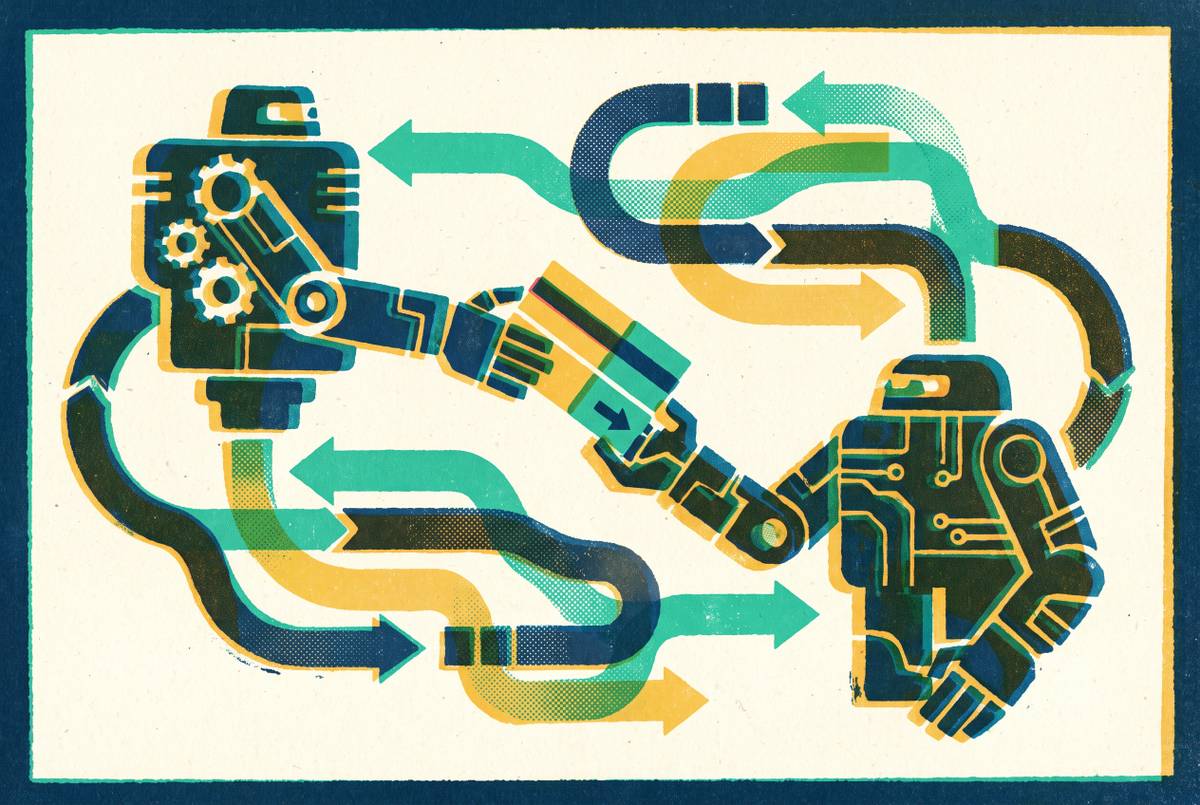
Handoffs reveal the weakness because teams or agents need the brand knowledge again each time work passes between them. An operator may include the correct guidance for copy while another supplies an older version to image generation. Each task can appear properly instructed in isolation, even though the campaign no longer shares one authoritative identity. Coordination remains manual despite automated production.
A client refresh makes the problem especially visible. Revised voice guidance or a new palette requires someone to find and rewrite every affected template, with no shared mechanism for propagating the change. The failure is not that AI cannot follow brand rules. Prompts are the wrong container for rules that need to live everywhere at once.
What it means to encode brand identity as callable infrastructure rather than repeated instructions
Instead of opening a document and converting its contents into instructions, an agent queries a system for the rules its task requires. The brand document remains an authoritative input, but it is no longer the operational interface. Identity becomes a service that the pipeline calls before it generates work.
The service layer has three connected components. A queryable knowledge base holds structured voice, visual identity, positioning, and compliance rules. A protocol layer gives compatible agents access to that knowledge, while a versioning mechanism makes updates available across connected workflows. These components have different jobs, but together they establish one maintained source for each client’s identity.
MCP, or Model Context Protocol, can provide that connection. Anthropic open-sourced MCP on November 25, 2024, so compatible agents could query external context through a shared protocol. An MCP server can expose brand rules, while an equivalent API can serve other integrations. The architectural requirement is the same in either case. Intake, generation, QA, and distribution must consult the brand layer automatically.
Ingesting a client's brand once so the pipeline can use it everywhere
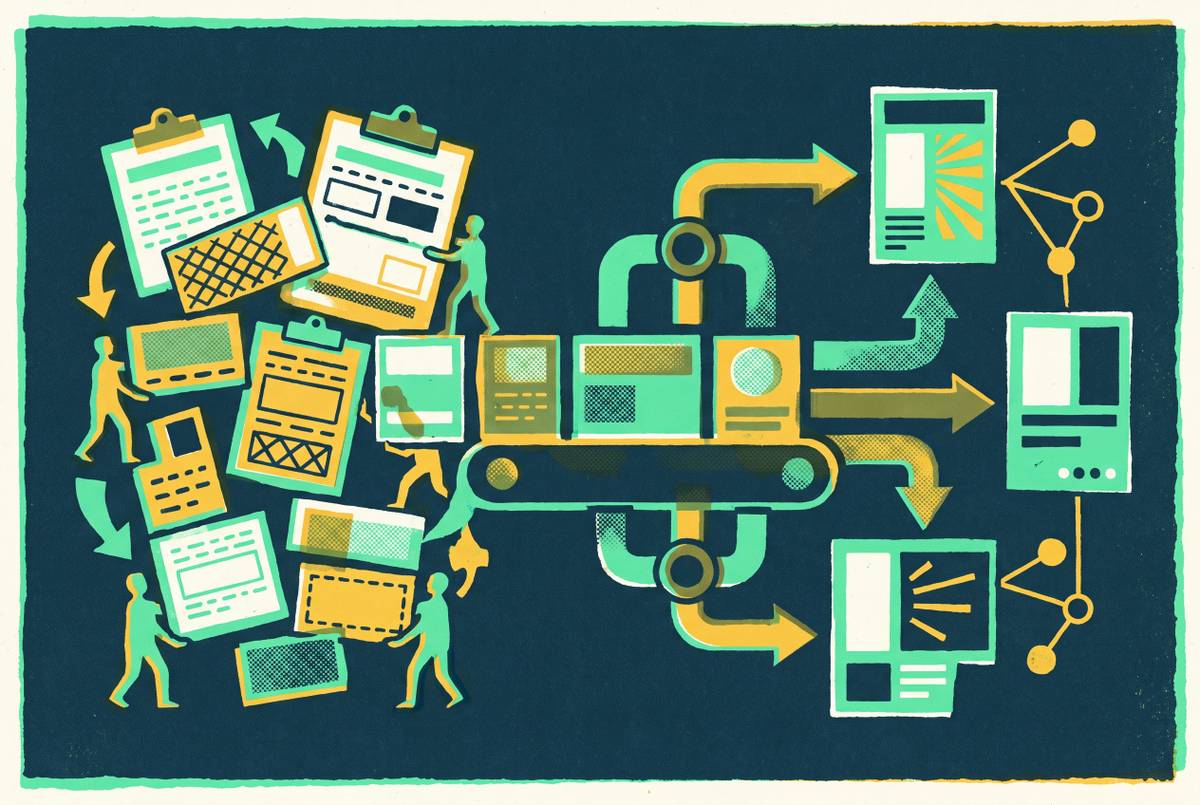
Ingestion begins with the materials the client already has. Those sources include the website, brand guide PDF, logo files, approved font files, imagery, and voice documentation. Their contents are parsed into structured categories such as identity, voice, color, typography, logo rules, motion, and imagery guidance. Structure makes individual rules retrievable without sending an entire document. The resulting store must be accessible to the pipeline.
For an agency, accessibility must coexist with account isolation. Each client needs a separate brand store and permission set so that work for one account cannot draw on another account’s guidance. This is also a confidentiality requirement, because strategy and creative direction belong to the client.
Versioning starts at this first ingest. The first brand context becomes v1, and later changes create new versions while keeping the old state for audit or rollback. That gives subsequent stages a defined foundation. Onboarding therefore concerns organizing existing authority into callable rules rather than requiring the client to create an entirely new documentation package.
Turning a task request into a brand-scoped brief the right agents receive
A stored brand becomes operational when a request activates it. For a task such as “create a campaign image for Client X’s product launch,” the briefing layer identifies the client and task type, then retrieves the relevant rules. An image brief needs the approved colors, the imagery style, where to place the logo, and the rules for typography. A copy brief instead needs the voice, approved terminology, banned phrases, and the tone for the channel. Retrieval is scoped to the work being requested.
The choice of channel narrows that context further before generation starts. A social caption, launch deck, and email show the same identity in different settings, so each needs the subset of guidance that fits. The pipeline assembles that subset as a structured input. No operator needs to write a new brand brief for every request. This is the automated handoff between stored knowledge and creative production.
The brief also determines where the task goes next. It identifies the copy, image, or video agents involved, the format each expects, and the QA criteria their outputs will face. Brand context and routing therefore travel together. This prevents context bloat without leaving agents to infer which parts of a full brand guide apply to their assignment.
How generation agents produce on-brand output when they draw from shared context
Generation becomes more dependable because agents receive authoritative rules. Copy agents use the client’s voice guidance, approved terminology, and banned phrases. Creative interpretation still happens within those boundaries. The boundaries come from a maintained source.
An image agent receives the approved palette, imagery style, logo placement rules, and typography guidance in its brief. Post-generation agents can check colors and fix them to match the approved hex codes. They can also composite proprietary fonts over imagery.
For a multi-format campaign, a social post, display ad, and email header draw from the same underlying identity. Their channel adaptations need not make them identical. They must remain expressions of the same rules. This makes the work less dependent on who runs it as volume grows, because routine brand governance is part of generation itself. It does not, however, establish that every generated asset is ready to publish.
What a dedicated brand-review step does that human spot-checking cannot do at scale
An agent whose job is review checks every generated asset before a human approves it. Copy checks cover banned phrases, tone deviations, and channel-inappropriate register. Visual checks cover palette, logo presence and placement, and approved typefaces. Checks on format cover resolution, aspect ratio, character count, and the platform’s limits.
The review must produce evidence. Each finding is attached to a specific rule so that a reviewer can see what was checked and why an asset passed or was flagged. That connection makes the assessment useful beyond its immediate verdict. It also creates an audit record showing which client’s rules were applied to the work. In a multi-brand pipeline, that record helps demonstrate separation between accounts.
Human review then begins from a different position. Instead of spending attention on whether a hex code is correct, reviewers can assess creative direction, strategic fit, and client expectations. Automation supplies a more systematic account of routine compliance so that human attention can concentrate on decisions the stored rules cannot settle.
How brand versioning keeps every agent current when a client's identity changes
Shared context loses its value if the workflows that connect to it keep using old rules. When a client revises its tone, palette, logo variants, or compliance constraints, the update must enter the brand store as a new version. Subsequent work then draws from that version automatically. The agency no longer has to locate a scattered collection of prompt templates.
Previous versions remain available for audit and rollback. That history lets the agency identify the rules applied to work produced before and after a change, which helps explain why an asset looks or sounds as it does. The model resembles code under version control. Changes are committed, versioned, and made available to the processes that need them.
This history also gives client conversations a concrete reference. The agency can show when guidance changed and which version governed subsequent production, rather than merely asserting that the update reached everyone. Versioning directly addresses drift caused by stale context. It also preserves the baseline needed to examine subtler changes in output over time.
What the full pipeline looks like for an agency managing several client brands simultaneously
A campaign request comes from a client brief, campaign calendar, or a request from within the agency. The pipeline identifies the account and task type, then queries that client’s isolated brand store. Its briefing layer assembles the rules for the requested format and channel, including the criteria for review. Generation agents receive this structured context and produce the deliverables. A review agent then evaluates each output against the same client’s rules before human approval.
Approved work proceeds to distribution after strategic and creative review. If the client changes its identity, a new brand version becomes the source for subsequent work. Other accounts remain separate throughout this process. The agency reuses its production architecture without blending the identities that architecture serves.
The connection method depends on the existing stack. Compatible agents can access the store through MCP, while proprietary products or client-facing tools can integrate through a REST API. Both paths use the same brand context, which is kept up to date. Software fit therefore depends on concrete capabilities, including isolated client stores, queryable rules, supported connections, version propagation, and evidenced review.
How do agency handoffs cause agentic brand drift, and what prevents it?
Handoffs cause drift when teams or agents receive incomplete, outdated, or inconsistent guidance. Shared infrastructure reduces that exposure by giving each stage access to the same authoritative context. Yet correct context is not sufficient on its own. Agents can also gradually diverge from brand intent while technically following the rules, particularly when optimizing for engagement or performance signals that do not fully represent the brand’s purpose.
This second form of drift is harder to detect. No one needs to change a rule or make an obvious mistake, and performance metrics may improve while the cumulative identity shifts. Individual assets can pass review even as their combined effect moves away from the original intent. Compliance monitoring alone cannot resolve that tension.
The practical response is periodic human review of the cumulative output, supported by version history and evidenced findings. The stored baseline gives reviewers a point of comparison, while the review trail shows patterns across assets as well as verdicts on each one. Shared infrastructure therefore reduces the surface area for drift and makes it more detectable without eliminating human judgment. Evidence gives reviewers the means to catch changes in identity as well as violations of rules.
How to start building the brand service layer for an existing agency pipeline
For an agency ready to make this shift, the first step is a bounded implementation. Choose one client with well-documented identity and high-volume work. Guidance that is already in place makes ingestion easier, and repeated production makes it easier to judge the effects. Ingest the brand guide, website, and approved files into an isolated, versioned store. Confirm that its rules are queryable before connecting agents.
Next, connect the tools the team already uses through MCP or a REST API and run a single campaign through automated briefing and generation. Low-risk work that repeats, such as social post drafts or asset reformatting, is a good place to start. Apply evidenced review initially as a nonblocking data-collection exercise. The aim is to establish what the review layer catches and what it misses.
Once that pattern works, replicate it for additional clients while preserving account isolation and versioning from the start. The principal work is connecting existing brand knowledge to production. Expansion then adds client-specific context to an established process rather than multiplying manually maintained instructions. Consistency becomes a property of the system, with human judgment reserved for whether that consistent work is also right for the brand.