When One Agency AI Stack Serves Ten Brand Voices Without Drift
Sealed, versioned brand profiles keep ten clients' voices apart.
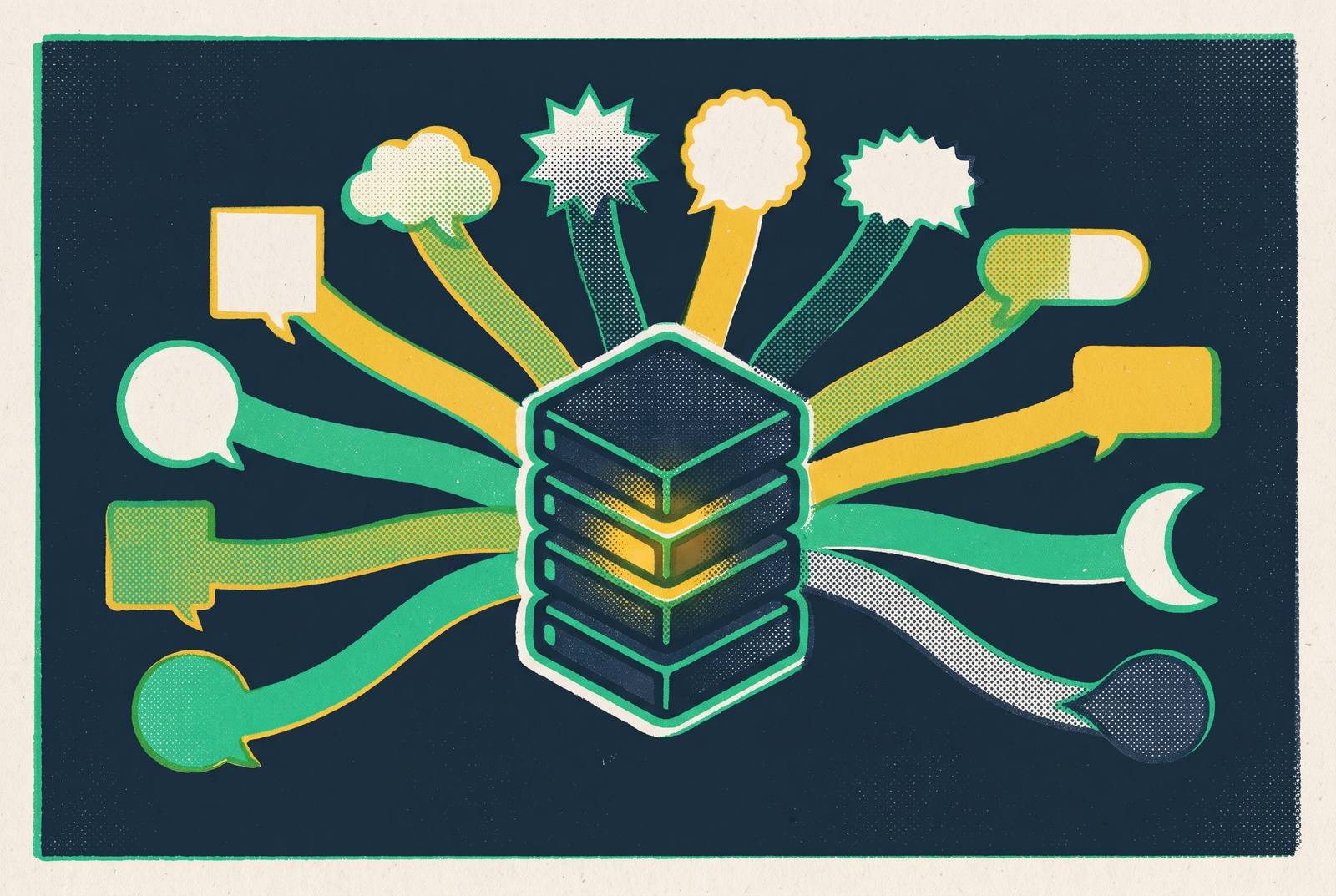
An agency AI stack can serve ten distinct brand voices without drift only when brand isolation is built into its architecture. A shared, centralized brand context layer gives every agent the same current rules for its assigned client while keeping other clients’ context out of reach. Generation, adaptation, and review must all draw from that versioned source.
Why multi-brand agencies have a drift problem that prompts cannot fix
AI makes it possible to produce campaign assets at a pace that professional delivery cannot safely absorb without controls. Agencies still have to keep a client’s voice, visual identity, and product representation intact and meet its compliance requirements in every deliverable. More output does not relax those obligations. Instead, it increases the number of places where a small departure can become a client-facing error.
The early response was to improve the instructions. Generic outputs that required heavy revision gave way to “mega-prompts” containing copy-pasted guidelines, but those prompts ran into context-window limits and created security risks. They also left consistency dependent on which instructions a person included in a particular session. A carefully written prompt could make one result better without making the whole workflow reliable.
The underlying limitation is that consistency in a model’s latent space is probabilistic. A small prompt variation or a quiet change to model weights can produce something a brand director immediately recognizes as wrong. That variability is normal generative behavior. Enterprise brand integrity clauses make the consequence operational, since inconsistent product representation or drifting brand colors can constitute an audit failure.
A better prompt therefore addresses only part of the problem. It cannot govern shared memory, preserve instructions across tool handoffs, or make every reviewer use the current guideline. Because the failure is structural, the remedy must be structural too.
How a shared AI stack contaminates brand contexts when it has no isolation layer
Cross-brand context contamination occurs when agents share state without namespace isolation. Context written for one brand enters a memory space that agents working for another brand can read. The error need not remain with its originator. Once an agent adopts polluted or misattributed content, other agents can reuse it and spread the confusion through subsequent work.
This differs from an agent simply misunderstanding a brief. The instruction may be clear, but some of the context around it belongs to another client. Without scope boundaries, the problem may remain undetected until a brand director flags a deliverable, after related work has already been produced.
Model updates can change generative behavior even when prompts and seeds stay constant, including through changes to text-encoder weights in diffusion models. A prompt lock is therefore not a permanent guarantee. The same request can cease to produce the visual treatment that previously passed review.
Tool handoffs compound both forms of drift. Each transition from an ideation model to a render engine to an editor creates another opportunity for the visual language to fragment. A barely perceptible shift can accumulate until the final asset fails client review. The diagnostic distinction is important because isolating brand context addresses cross-brand leakage, while model-driven variation still requires evaluation of the output itself.
What it means to make a brand machine-readable before agents can use it reliably
A prose guideline and a structured brand profile give an agent different kinds of input. A document might describe a tone as “warm and direct,” leaving each agent to interpret the phrase. A machine-readable schema can express that attribute as a numeric value with a source, confidence score, and timestamp. The agent can query, compare, and version the structured value.
A PDF style guide does not provide that queryable structure. Even when its text can be read, the document still requires interpretation before its guidance becomes usable rules. Visual identity presents the same problem. A color swatch is not equivalent to a named color token with a hex code and timestamp, and prose descriptions of typography or logo geometry do not replace structured specifications.
The brand-spec schema provides an open convention for this representation. It defines a file and folder layout, frontmatter conventions, and validation rules, with an entry-point hierarchy beginning with identity, voice, and vocabulary files. Compatible agents can clone and parse that structure. Portability reduces the need to translate the same brand identity separately for every tool.
For web-facing identity, Organization schema markup in JSON-LD declares the canonical name, logo, description, and social profiles. It gives AI systems an explicit entity signal rather than leaving them to infer identity from surrounding content. Missing or inaccurate structured data can result in skipped or incorrect brand representations.
This restructuring creates a reusable foundation for the stack. But a well-formed profile in one tool does not keep the other tools up to date.
How MCP turns a single structured brand profile into shared context across every agent in a stack
The Model Context Protocol, or MCP, addresses that distribution requirement through a common client-server architecture. Instead of maintaining a custom integration and a separate guideline copy for each tool, compatible agents can query the same live brand context. The profile becomes a shared source, not a repeated attachment. Its voice rules, visual identity, positioning, and rules on prohibited treatments can be at hand wherever generation begins.
Anthropic introduced MCP in November 2024 and donated it to the Linux Foundation’s Agentic AI Foundation in December 2025. That provenance establishes it as an open standard rather than a proprietary route into one vendor’s tools. Agencies can use the same connection pattern for all compatible agents. Brand context need not be reformatted for each new connection.
In a workflow configured to retrieve context before generation, an MCP server makes the relevant brand profile available before an agent produces a word or pixel. This replaces reliance on someone remembering to paste the guidelines. When the profile changes, connected agents can receive the new version on their next call. The team no longer has to distribute replacement copies manually.
Block built more than 60 internal MCP servers and deployed an internal MCP-based agent for uses including compliance workflows. Salesforce reported 4.5 million MCP calls processed through its Headless 360 platform since its April 2026 launch. These examples demonstrate production use of the protocol, rather than proving a particular brand-governance implementation.
For daily agency work, the connection can make brand voice profiles, content calendars, and ICP documents retrievable by name. A shared connection still needs an architecture that limits each task to the correct client.
How can agencies enforce distinct brand context for every client while keeping agents coordinated?
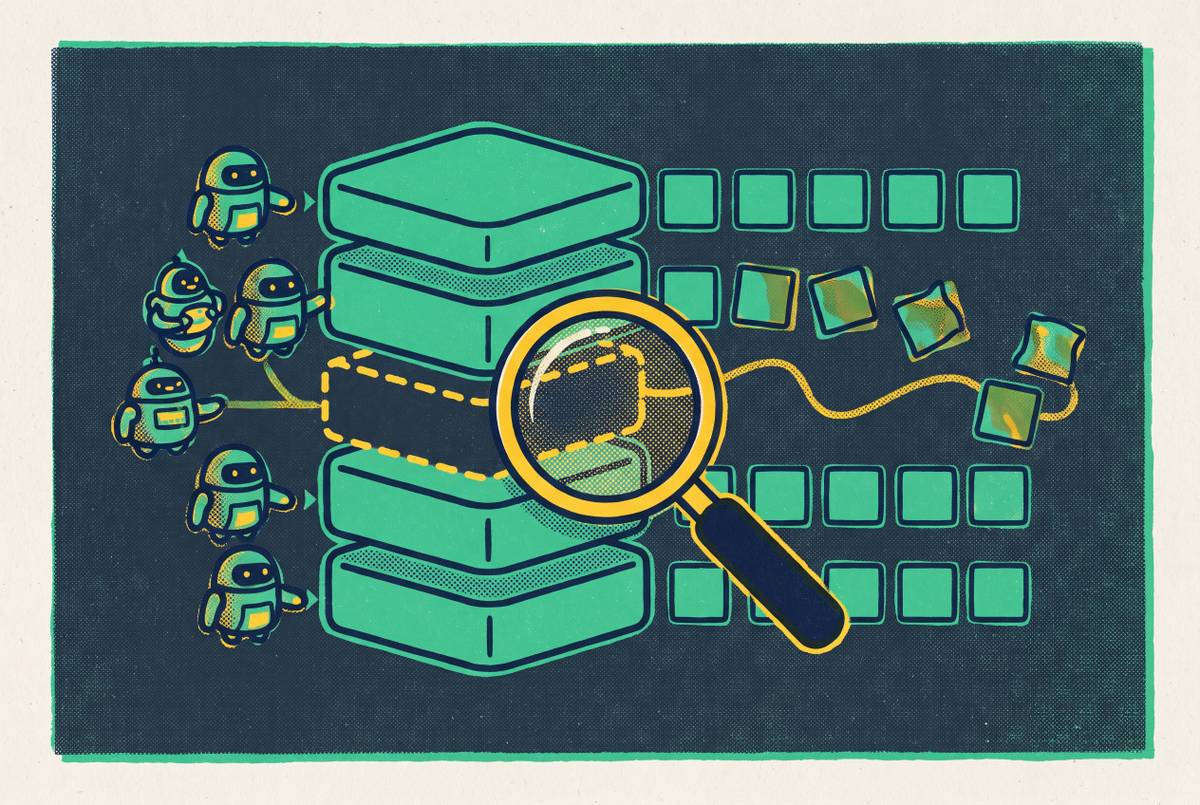
Namespace isolation separates access to brand context from access to shared infrastructure. Each client has a sealed profile containing its identity, voice, visual rules, and compliance constraints, while a common orchestration layer coordinates the agents. The agent’s task determines which brand namespace it can access.
An agent assigned to Brand A cannot read Brand B’s namespace, so cross-brand leakage through that access path is blocked by architecture. This is the structural distinction between isolation and an instruction to ignore other clients. Separate project pages can help people focus on their work, but the access boundary cannot rely on a team member choosing the right page.
Within that boundary, agents have different jobs in a creator, guardian, and adaptation pattern. The creator generates against the assigned brand profile. A Brand Guardian Agent evaluates the draft against stylistic and compliance guidelines before human review, returning it for revision when it uses a banned word, breaks tone, or violates a visual rule. A Voice Agent can perform a parallel check against brand-specific tone, style, and legal requirements.
An Adaptation Agent then reformats approved master narratives and visuals for individual distribution platforms. It remains subject to the same namespace and identity constraints. Approval of the master does not exempt later transformations from the rules, because adaptation is another point where brand language can fragment.
Agents can work on separate deliverables and get feedback on each one without using another brand’s context. This arrangement contains cross-brand contamination, while the guardian layer addresses deviations that can still arise within correctly scoped generation.
What brand governance looks like after generation, and why review must be evidence-based
Correctly scoped inputs do not make first-generation outputs client-ready. Artifacts, lighting inconsistencies, composition problems, and tone deviations can remain even in a well-tuned workflow. Review therefore needs its own deliberate stage. Under enterprise brand integrity requirements, that stage must produce evidence rather than depend solely on a senior designer’s sign-off.
An evidence-based check records which rule was evaluated, what the output showed, and whether it passed. That record makes a decision defensible without relying on a reviewer’s memory of the guideline. It also distinguishes rule-based compliance from a broader creative judgment. Automated checks can check rule-based compliance, leaving people to make decisions that call for interpretation.
Volkswagen’s work with SolidMeta demonstrates this approach in production. Its VW Tiguan campaign assets were evaluated against brand identity and design language, color representation, image style and tone, vehicle presentation, staging and environment, perspective and focal length, and regional regulations. Amazon Bedrock powered the brand-guideline evaluation. Separately, DreamBooth fine-tuning and a LoRA adapter specialized the generation model on VW design details, including grille textures and trim options, on a SageMaker endpoint.
The distinction between generation and evaluation is central. Fine-tuning helped with product representation, while the evaluation layer checked the resulting assets against the guidelines. Coca-Cola and Adobe’s Project Fizzion addressed the same governance problem with a house model fine-tuned on decades of brand assets and placed behind a guidelines gate. That gate supported generation by agencies and internal teams without requiring a human to approve every frame.
Typeface’s 2026 guide describes its Brand Agent as checking images and copy against a Brand Kit before publishing, flagging deviations in tone, terminology, and visual treatment. Such checks do not eliminate creative judgment. A shadow that makes a luxury image read as expensive rather than cheap, complex reflections, and transparency can still require human review.
The review layer must also change when the brand changes. A guidelines gate using outdated rules can approve work that is no longer compliant. Versioned context must therefore reach review agents as well as generation agents, or the safeguard itself becomes a source of drift.
How to build one brand context layer that serves multiple client brands without cross-contamination
For an agency moving away from prompt-dependent production, the implementation sequence begins with the brand data. Audit and structure each client’s voice rules, color system, typography, logo constraints, vocabulary, and compliance requirements. Turn the prose document into values with sources and timestamps. Open conventions such as brand-spec provide a portable starting structure, while Organization markup in JSON-LD serves the web-facing identity. Complete this work one brand at a time to avoid introducing contamination during preparation.
Next, assign each brand a sealed namespace in the shared infrastructure. Keep its context profile separate from other clients’ profiles while using the same orchestration layer. The boundary must control what agents can read. Without that control, brand context can get mixed in a central repository just as it can in a shared prompt document.
Then connect the agents to the live context over MCP or a REST API. MCP-compatible agents, including Claude, ChatGPT, Claude Code, Cursor, and Codex, can connect to the same brand context server. Custom products can use the API route. Both paths should retrieve the same authoritative context rather than rely on cached or manually supplied guideline copies.
After access is established, make brand changes propagate automatically. A revised color, retired typeface, or updated tone rule should create a new context version that connected agents receive on their next call. A versioned identity system records changes and maintains a current authoritative version.
Finally, connect the review system to that same versioned source. The Brand Guardian Agent or equivalent layer should assess output against live context. A change is not fully deployed while generation and review disagree about the rules.