Why Ten Brands Sound Identical Out of Your Agency AI Stack and How to Architect Around It
Persistent, versioned brand context is what keeps agency AI distinct.

Agencies keep brands distinct across AI workflows by giving every agent access to a structured, versioned context that is kept separate for each client. Without that infrastructure, shared tools default toward the same model priors, producing interchangeable work. Better prompts can guide individual requests, but persistent brand context is what makes consistency enforceable across an agency stack.
Why AI outputs regress to sameness when brand context is absent
A model can write fluently without knowing the brand. When a session begins without persistent brand context, the model has no reliable memory of prior client work and fills the gaps from its training data. Those defaults may produce competent copy, but they do not encode the distinctions between clients. The model faces context starvation, a structural shortage of the information that would make the output specific.
A more capable model still needs the client’s identity as an explicit input rather than an invitation to infer it from general knowledge. Without that input, copy, visual creative, and campaign outputs tend to follow familiar patterns that could belong to any client using the same tools. The architecture leaves differentiation to chance. The earlier “sea of sameness” was therefore not simply a failure of creative direction, but a failure to embed brand knowledge where generation happens.
How do handoffs between agency teams and AI agents cause brand drift?
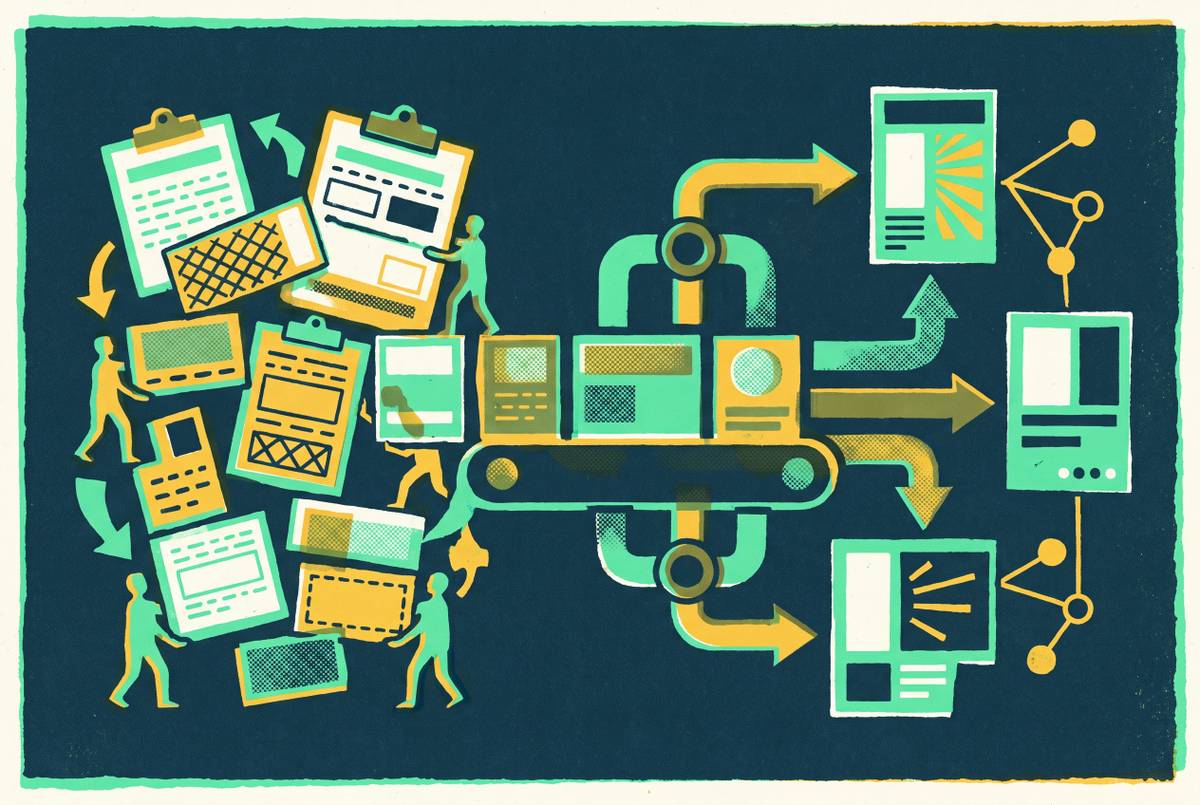
Handoffs amplify context starvation because each agent can interpret a task correctly while working from a different understanding of the brand. A social agent, an email agent, and a campaign-copy agent may each satisfy their local instructions yet produce an incoherent campaign. Without a persistent source of truth, brand identity has to survive through whatever context each step happens to receive.
Transient agent memory makes this fragmentation harder to resolve. The “Agent Tennis” failure mode occurs when agents bounce work between themselves because neither has the authority or shared context to decide what is on-brand. More agents then create more opportunities for disagreement. For the customer, that can mean contradictory brand signals within the same campaign or hour. Treating those conflicts as downstream editorial problems puts the burden on reviewers after the architecture has already allowed the drift.
Why prompt engineering was never going to fix this
Prompts remain useful for specifying a task and directing how an agent uses brand information. They are not a durable replacement for that information. A mega-prompt filled with copied guidelines may work for one request, but doing this for dozens of clients and hundreds of requests leaves people with separate versions of the brand to keep up to date by hand. Context-window limits constrain how much each version can contain. Central updates and audits become impractical when the rules live in individual conversations.
The distinction is between prompt-as-input and prompt-as-infrastructure. The former directs a request, while the latter asks every team member to reconstruct and maintain the system’s operating rules. Relying on each person to do that becomes risky when the roster grows or the person in charge leaves. Copying sensitive client materials into consumer-facing interfaces also brings security risks when there is no governance layer. A fifty-page PDF does not solve the underlying problem, because an agent cannot consistently enforce subjective instructions such as “feel premium” merely because they appear in a brand book.
What brand-context infrastructure actually consists of
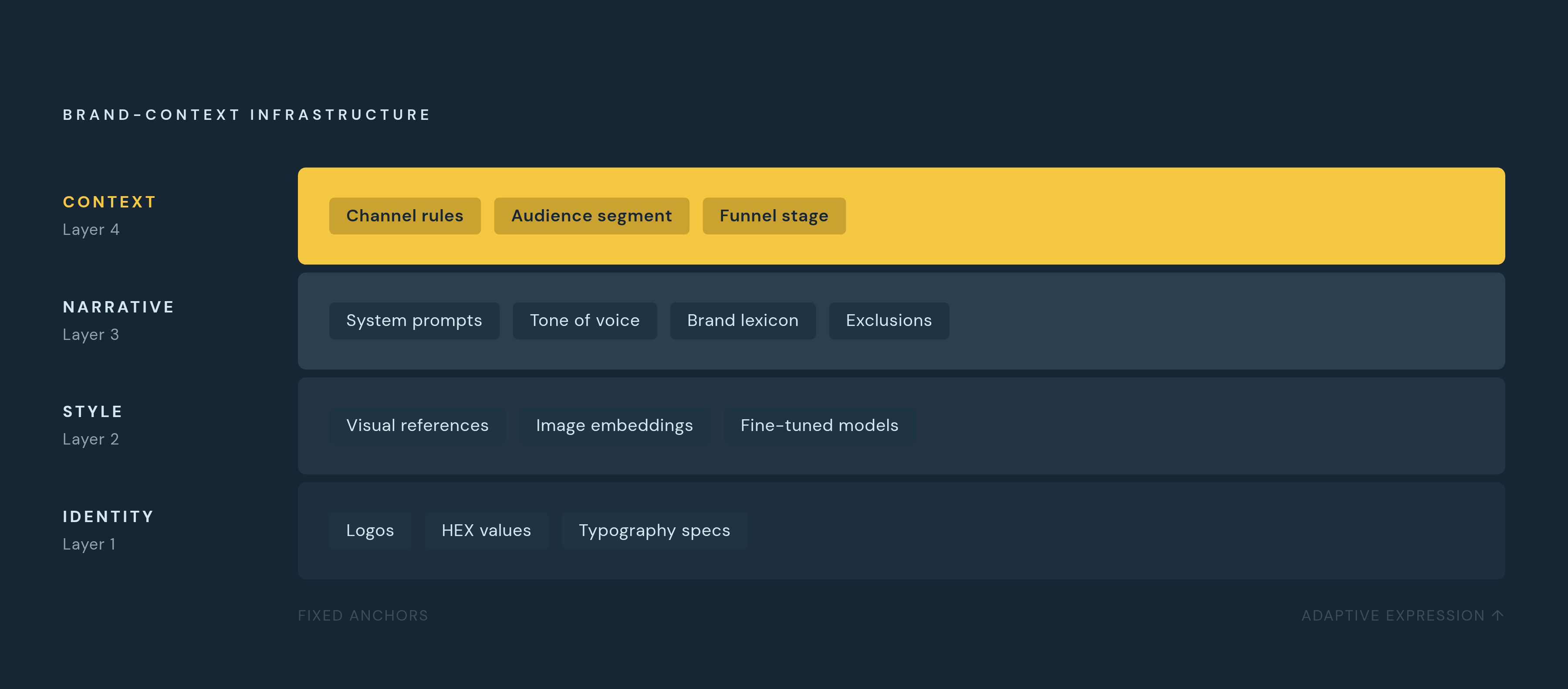
Brand-context infrastructure puts those instructions in a persistent, machine-readable source that agents can query before they generate work. It has four functional layers, each with a distinct job. The identity layer defines logos, exact HEX color values, and typography specifications. The style layer has visual references, image embeddings, and fine-tuned models trained on the brand’s asset library. These layers separate the parts of the identity that must stay fixed from the overall look that generation needs to reproduce.
The narrative layer defines system prompts, tone-of-voice rules, the brand lexicon, and explicit exclusions for words, phrases, and registers. The context layer defines how expression changes across channels, audience segments, and funnel stages. Together, these layers replace broad descriptions with queryable constraints, including exact values, negative rules, and modular prompt components.
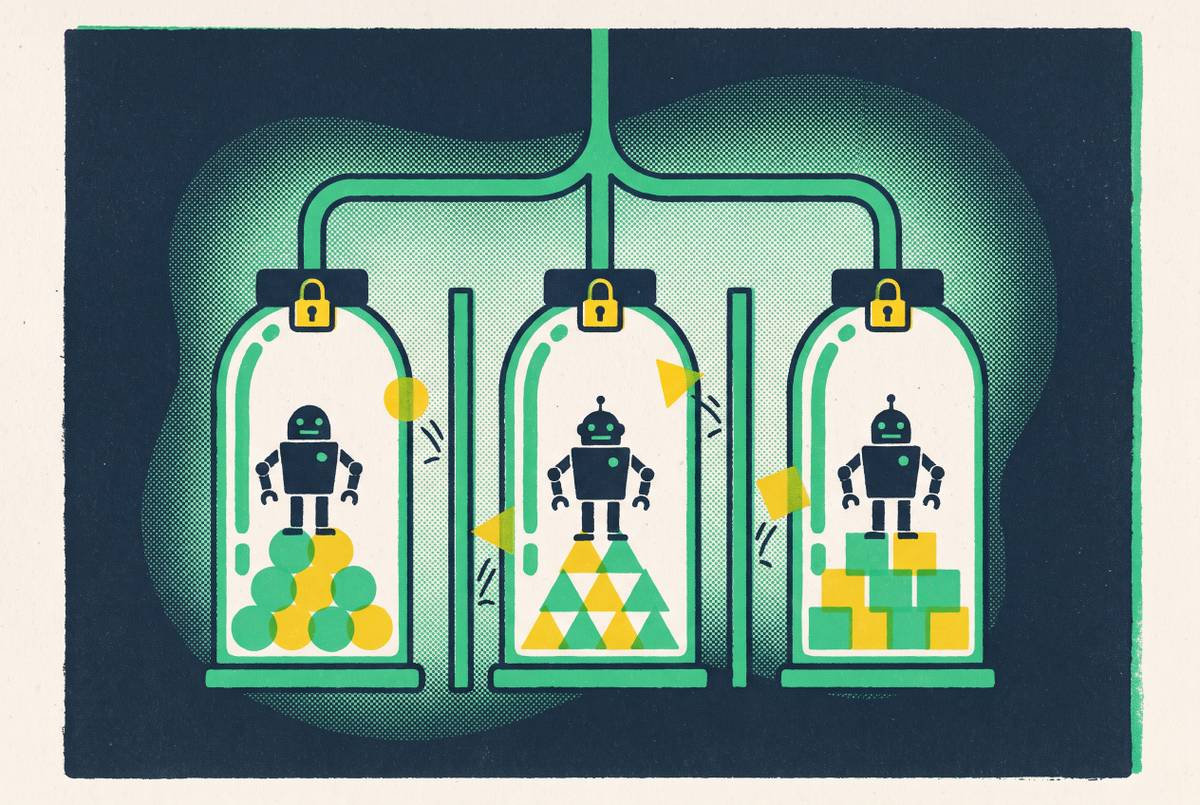
For an agency, this structure is replicated per client with strict isolation between contexts. Each context is also versioned, so a palette change or repositioning updates the source used by connected agents rather than depending on someone to revise every tool manually. Choosing that structure is an engineering decision about how the system obtains and maintains authoritative information.
How MCP gives agents a live connection to that context rather than a stale copy
An MCP server can expose voice rules, visual identity, positioning, and do/don’ts to compatible tools before they generate. The agent queries the brand rather than relying on a copied brief or something it half-remembers. Context resides on the server, where authorized agents can access the relevant client’s information.
Available integrations serve different parts of this workflow. Notion and Google Drive MCP servers let compatible agents search for and get ICP documents, brand voice profiles, and content calendars, though the Google Drive server is still in developer preview. Knak’s MCP Server connects assistants to brands, campaigns, and themes for email generation through its rendering pipeline. Amazon Ads launched its MCP server in open beta on February 2, 2026. These integrations serve distinct use cases while leaving the need for a structured brand-context store.
A brand’s own server also gives it control over what an agent receives without relying on crawling or HTML parsing. That access has a planning cost. Anthropic engineering showed that tool definitions and intermediate results can take up a lot of context, and that code execution used fewer tokens than direct tool calls. Stacking servers therefore requires attention to schema load.
Locking visual brand identity into image and video generation
Visual generation needs more than access to a voice profile. RAG or MCP can provide brand information, but fine-tuning addresses how an image or video model reproduces the brand’s visual style. LoRAs are one approach to training on the brand’s own asset library so that generation reflects its imagery. As with copy, the system needs a concrete representation of the brand.
Fine-tuning does not remove the need for exact validation. Earlier image-generation workflows struggled with brand colors and needed a lot of fixes, but post-processing can now fix color mismatches when it is built into the workflow. Automated agents can detect and correct colors against official HEX or Pantone values. Typography is composited programmatically using the brand’s proprietary fonts.
The Brand Guardian pattern — reviewing AI output before it ships
A dedicated Brand Guardian Agent checks finished creative against the same context used to generate it. Its job is narrower than the Creator Agent’s. It checks the work against stylistic and compliance rules, finds violations, and sends it back for fixes before a person reviews it. A banned word, an inappropriate register, or a visual identity breach becomes a specific reason to revise rather than a vague judgment that the output feels wrong.
The value of this checkpoint depends on evidence. The Guardian identifies which rule was violated and where, making its feedback actionable without asking another agent to reinterpret the brand from scratch. For multi-brand agencies, each review draws from the relevant client’s isolated context. The same review pattern can therefore enforce different rules for different clients. It remains a first-pass filter whose purpose is to make human judgment about strategy, positioning, or taste less encumbered by preventable violations.
How to structure a per-client brand context that agents can actually use
For teams building this layer, the deliverable should be a structured, versioned file or server endpoint. Start with the client’s website, brand guide, logos, fonts, and imagery, then translate those materials into the four-layer structure. In the identity layer, record each color as a HEX value and each typographic rule as a named specification. Exact values take priority over descriptive approximations. The resulting input must be usable by an agent.
In the style layer, give references to specific assets and the visual material used to guide fine-tuning. In the narrative layer, pair positive constraints with negative ones, specifying the words and registers to use as well as those to exclude. Replace “sound approachable” with sentences that demonstrate the intended voice. In the context layer, define channel, audience, and funnel-stage variations so that adaptation does not become unrestricted reinvention.
Each client should have an isolated context with no shared namespace. A term permitted for a luxury client may be prohibited for a mass-market client using the same stack. Version the context whenever the brand changes, so connected agents can get the new state without being re-briefed one by one. This structured source defines what the MCP server exposes, what the visual training material represents, and what the Guardian checks.
What the architecture looks like across a full agency AI stack
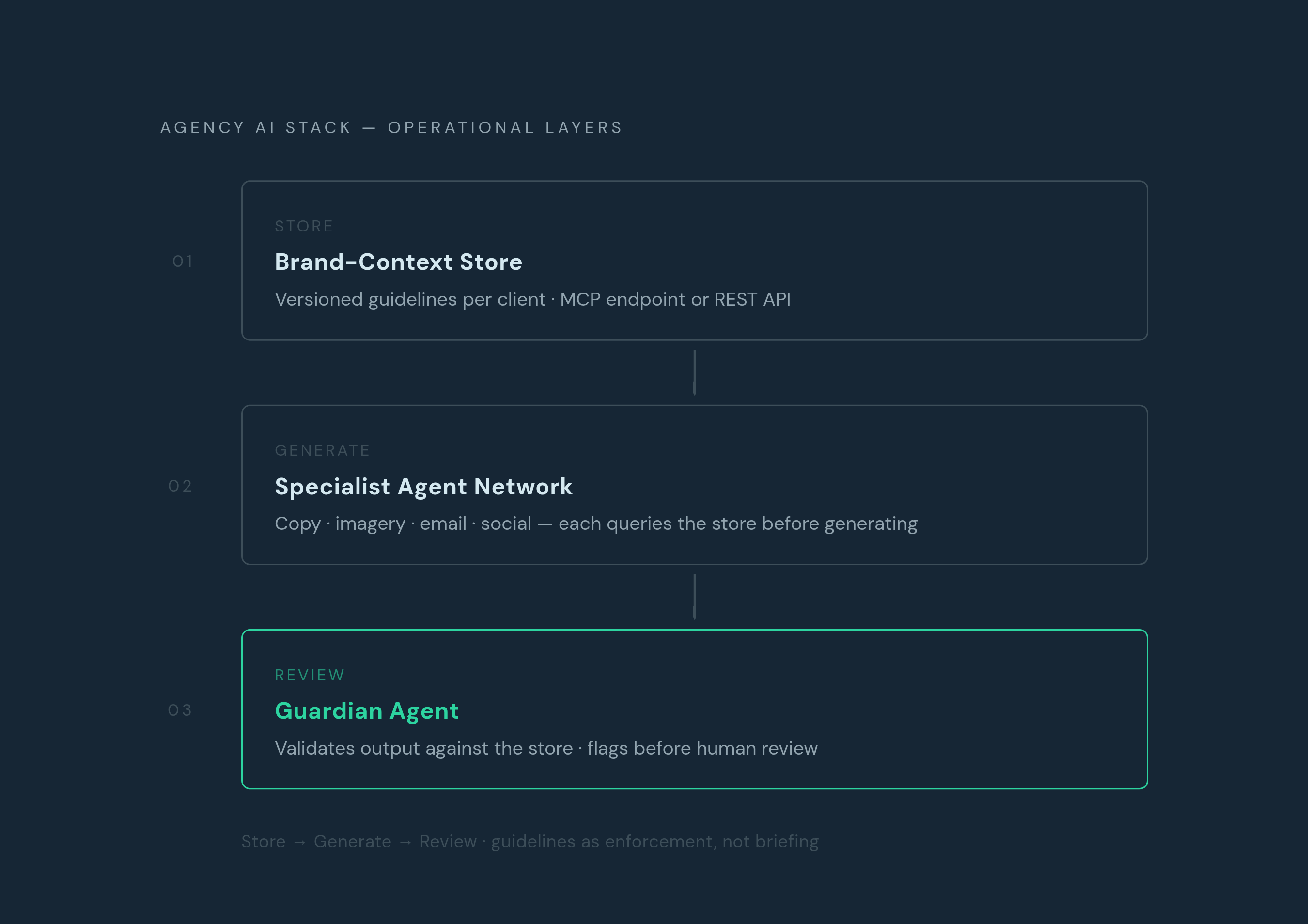
The full stack has three operational layers in sequence. These differ from the four functional layers inside the brand context itself. First is the structured, versioned store for each client, exposed through an MCP endpoint or REST API. Second is the network of specialist agents that queries the relevant store before generating copy, imagery, email, or social content. Third is the review agent that validates completed work against that same source before delivery to a human reviewer.
Within the generation layer, visual fine-tuning supplies brand-specific style while post-processing enforces exact colors and typography. The Guardian then evaluates the finished output rather than assuming that correct inputs guarantee correct results. Generation and review share an authority but perform different jobs. That separation is what turns guidelines from briefing material into an enforceable part of the workflow.
The same general-purpose models and infrastructure can serve all clients. Teams can choose whether to use visual fine-tuning for each client, but every agent must have context specific to the client it is working for. Software fit therefore depends on access to structured context, isolation, versioning, and evidence-backed review. Faster production and distinct brand identities become compatible when the stack preserves those boundaries.
The agency model that becomes possible once context is infrastructure
Once brand knowledge is maintained centrally, onboarding changes from repeatedly briefing tools and people to defining the client’s context and connecting it to the stack. That reduces dependence on individual memory. People focus on positioning, identity, and taste, while the system does the routine work and checks that it follows the rules. The agency’s operating responsibility shifts toward maintaining the brand source and the processes that use it.
That shift also creates a more defensible ongoing service. Periodic automated review of published output can compare it with the live context, flag drift, and turn consistency monitoring into a monthly deliverable. A retainer can then cover ongoing generation and brand monitoring rather than rest on an assertion that the agency understands the client.
Without this architecture, apparent savings from rapid generation are spent again on revision cycles and client risk that is difficult to audit. With it, the agency has a basis for a durable consistency commitment without pretending that creative judgment can be automated away. The commercial unit of delivery changes from content that feels right to content checked against the client’s defined identity. That is a stronger foundation for an agency service than faster production alone.