Namespace Architecture That Stops Agent Brand Bleed Across Multi-Account Workflows
Enforced client boundaries, not better prompts, keep agents from mixing brands.

Keeping brand consistent across agency and multi-brand agent workflows requires enforced namespace isolation. Each client needs brand context with clear bounds, versioned state, and access controls that keep agents from reading other clients’ data. Shared skills can remain reusable, but generation, runtime, and review must all operate within the client’s scope.
Why brand bleed in multi-account agent workflows is an architecture failure, not a prompt failure
A shared vector index can return a competitor client’s voice rules because those rules are semantically close to the agent’s query. The agent then uses the wrong terminology or positioning in its output, even though its system prompt names the correct client. The retrieval boundary has already failed at that point. Better wording does not remove the other client’s records from the searchable surface.
This makes agent multi-tenancy harder than traditional SaaS multi-tenancy. Agents hold mutable in-memory state, invoke tools with real-world side effects, and make LLM calls that can expose context across request boundaries. A prompt has no direct control over those boundaries. Its instructions are advisory, while access controls determine what the agent can retrieve and change.
What agents actually share when namespace walls are absent
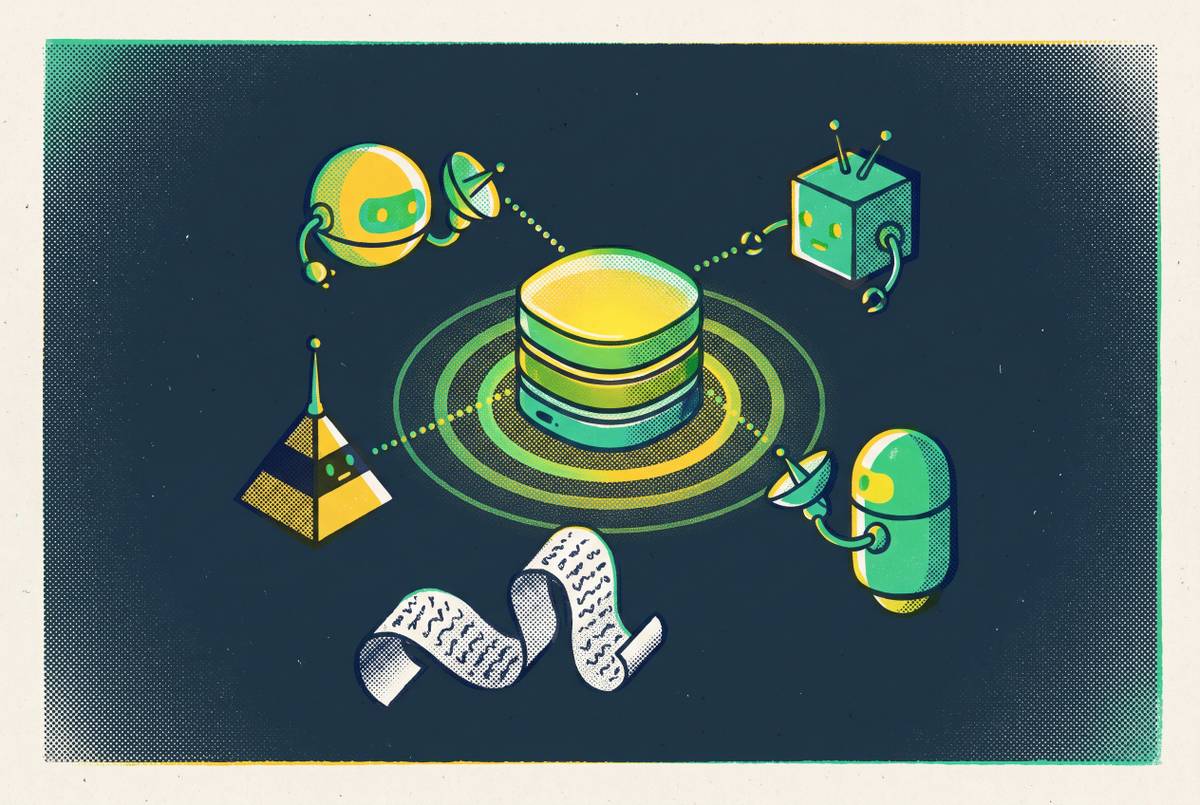
Ephemeral workspaces expose files, cached credentials, and in-memory brand context when a run is not destroyed in a finally block on completion. The next tenant’s run can pick up what was left behind. Vector memory exposes another route when embeddings from different clients occupy a shared index. Semantic similarity does not establish client ownership, so an approximate search can return another client’s material when tenant metadata and retrieval filters are absent.
Tool registries expose brand assets and data sources when a skill is not scoped to a client’s root directory. That gives the skill ambient access to accounts beyond the one the task is for. Model inference introduces a different exposure through shared KV caches, where a measurable cache hit can reveal information about another tenant’s prompt. “I Know What You Asked: Prompt Leakage via KV-Cache Sharing in Multi-Tenant LLM Serving,” presented at the Network and Distributed System Security Symposium 2025, documented this timing side channel.
These surfaces extend beyond the documents visible to an agent. The OWASP LLM Top 10 (v2025) includes LLM08:2025 for vector and embedding weaknesses, covering RAG poisoning, embedding inversion, and cross-tenant access control failures. A subtler failure occurs when vector retrieval seeds a knowledge-graph traversal that bypasses the namespace filter. The initial search can appear scoped while a later retrieval step crosses the boundary.
The three-layer architecture that creates enforceable namespace walls
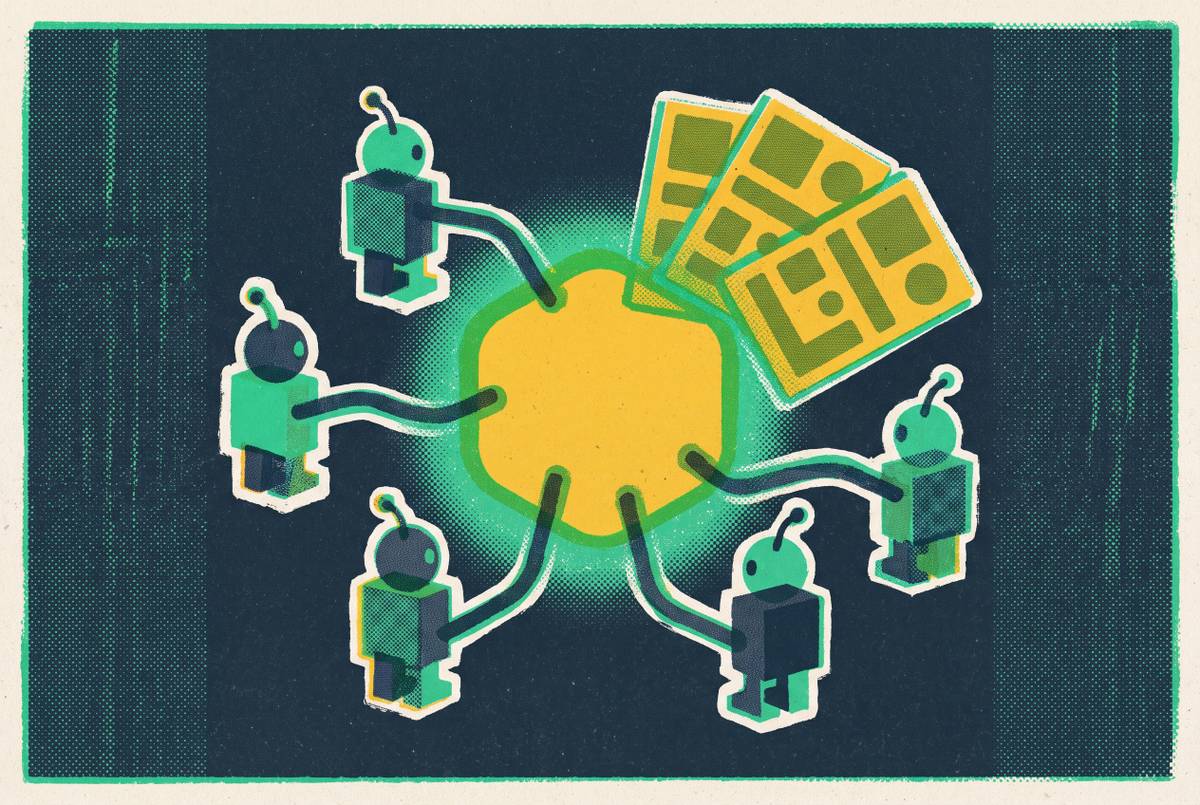
The architecture separates universal capabilities from client-specific knowledge across three layers. The shared skill library contains stateless capabilities, including summarization, classification, content generation, and image generation. Those skills accept client behavior through parameters. The per-client context layer holds brand voice, approved terminology, data source mappings, output templates, and escalation rules. This layer is configuration.
The orchestration layer loads that context before any skill executes. It extracts the brand voice specification and passes it to each skill that produces output. The order of operations is essential to isolation. In the kitchen analogy, skills are standardized recipes, client context records each regular’s preferences, and the orchestrator is the expediter routing orders with the correct instructions.
This separation also defines what an update may touch. A shared skill can improve without modifying a client’s brand context, while a brand change can remain confined to that client’s configuration. Neither change requires duplicating the whole workflow for every account. That independence provides the basis for auditing and versioning the system as the client roster grows.
How to structure the per-client namespace so brand context cannot escape its boundary
A dedicated folder organizes context but does not enforce isolation. Every read and write path must respect the client boundary. At the vector layer, every record must be stamped with tenant_id, and every retrieval query must enforce a filter on that field. Both controls are required for a scoped search. For regulated clients or high-brand-risk engagements, separate vector indices remove the specific dependency on a correctly configured filter between adjacent brand corpora.
Within that boundary, an identity file defines brand personality, communication style, visual asset pointers, and voice rules. It loads when each session starts, instead of being added now and then through prompt injection. Work in progress belongs in a separate state file. That state can interact with the identity definition, but it must never override it.
MCP calls that read or write brand memory should require a user-scoped credential, with the server enforcing client isolation at the persistence layer. A builder’s implementation check therefore has three parts. Client identity must accompany every tool call, each MCP tool must be limited to the client’s root directory, and every retrieval must be tagged with the client ID in audit logs.
Making brand context machine-consumable within a namespace
A scoped namespace containing only a PDF brand guide still leaves the agent interpreting unstructured material. It may misread a rule or retrieve only part of it. Missing context then invites inference. If the agent can still access outside sources, those gaps can lead it to look elsewhere for context. Structure makes the authorized namespace usable without that fallback.
Brand identity therefore needs a form a system can consume predictably. Voice rules should be parseable constraints. Applied colors need roles such as “accent,” “background,” and “text-primary,” not merely positions in a swatch grid. The distinction is between showing a person the brand and specifying what an agent must apply.
In the file layer, brand.md holds strategy, voice, and visual identity primitives, while DESIGN.md holds the applied visual system. SKILL.md provides reusable task instructions that compatible agents load on demand. DESIGN.md combines design tokens with plain-text rationale for interface and code generation. Versioning the client’s context allows changes to reach connected agents without manually rewriting individual skill definitions or prompts.
Skill versioning as the mechanism that keeps namespace walls from drifting apart
Even a correctly separated architecture can degrade through versioning drift. A shared skill changes, but the client contexts that consume it do not migrate. Outputs then diverge without an obvious change in the workflow. A naming convention such as skill.summarize.v2 shows which version is in use. When an update breaks compatibility, the old version must remain available until every client context has migrated.
The interface contract’s inputs, outputs, and parameters must remain stable for existing client contexts to consume a shared improvement without change. Otherwise, Client A may use v2 with a new brand voice parameter while Client B remains on v1 without it. The apparent capability is the same, but its behavior differs. Controlled migration prevents that difference from becoming an unexplained brand failure.
Brand updates need the same versioning discipline. Changes to voice guidelines, color systems, or approved terminology should propagate as versioned context. This also strengthens handoffs between teams and agents. A versioned skill library and versioned client context let a team identify which skill produced an output and whether its brand definition was current or stale.
How MCP delivers scoped brand context to agents without bespoke connectors
MCP provides a consistent protocol for delivering isolated brand context to compliant agents. Workflows can discover and invoke a brand context server, pass structured inputs, and use structured outputs downstream. One server can support multiple agents and workflows. This avoids bespoke connectors for every client and consumer without requiring those consumers to share unrestricted access to brand data.
Permission enforcement belongs on the server side of that exchange. A team member’s role, region, or permission level can determine which assets and guidelines the server exposes. The calling agent’s prompt is not the access policy. Scoped credentials connect the request to its authorized context, while structured tool calls make that context available as a workflow step. Stateless operations also avoid relying on retained session state to distinguish clients.
Microsoft Foundry’s Toolboxes illustrates the governance pattern through a unified MCP-compatible endpoint that centralizes identity, governance, and observability. Its stateless operations and enterprise-managed identity let it run in a multi-tenant deployment. The delivery protocol need not become a separate brand repository. The same underlying context can also serve products through a REST API, preserving the namespace boundary whether the consumer is an agent or an integrated product.
What namespace isolation looks like at the compute and runtime layer
Data controls cannot compensate for a runtime that recycles client state between runs. Each agent run should receive its own ephemeral workspace directory, destroyed on completion. Cleanup must respect tenancy as well. Background sweep processes that prune stale directories need their own tenant scope so that one client’s cleanup job cannot read another client’s workspace. The runtime boundary must hold during maintenance as well as execution.
Thread-per-request execution in a shared process provides no meaningful isolation and is appropriate only for single-tenant deployments. Linux namespaces with cgroups provide process-level isolation with moderate overhead. Firecracker MicroVM provides hardware-level kernel isolation for regulated clients where data commingling creates legal risk. These options address execution isolation, rather than replacing the context and tool controls above them.
The Kubernetes Agent Sandbox project supports isolated stateful workloads for agent runtimes. Provisioning isolated pods per run and resetting state between tenants applies the ephemeral-workspace pattern at scale. Inference still requires a separate control, however. Compute isolation does not close the timing side channel created by shared KV caches. Multi-tenant deployments must disable cache sharing or use per-tenant cache partitioning to eliminate that exposure.
Reviewing AI-generated brand output against the namespace before it ships
Isolation determines which context an agent can access. A pre-ship review must test conformance against the same versioned brand context used during generation. A different or stale version can produce false positives and false negatives. Checking Client A’s output against Client B’s rules is a namespace violation even when generation was correctly isolated.
Each check should produce a finding tied to a specific brand rule. That evidence gives the brand team something to correct. Repeated failures against one rule can signal that its context definition is ambiguous or missing. When there is a lot of creative work to review, teams may check a sample of it. Versioned namespaces make that sampling meaningful by establishing which brand definition governed each piece of output.
The review gate turns the architecture into a verifiable system. Retrieval logs establish the client scope, skill and context versions establish the generation conditions, and rule-specific findings establish the basis for acceptance or revision. A team that can produce evidence for every brand check has moved consistency from creative judgment alone to an auditable system property.