Keeping Every Client Brand Voice Stable as AI Products Multiply Across Delivery Teams
A shared, versioned brand layer keeps every agent on-voice.
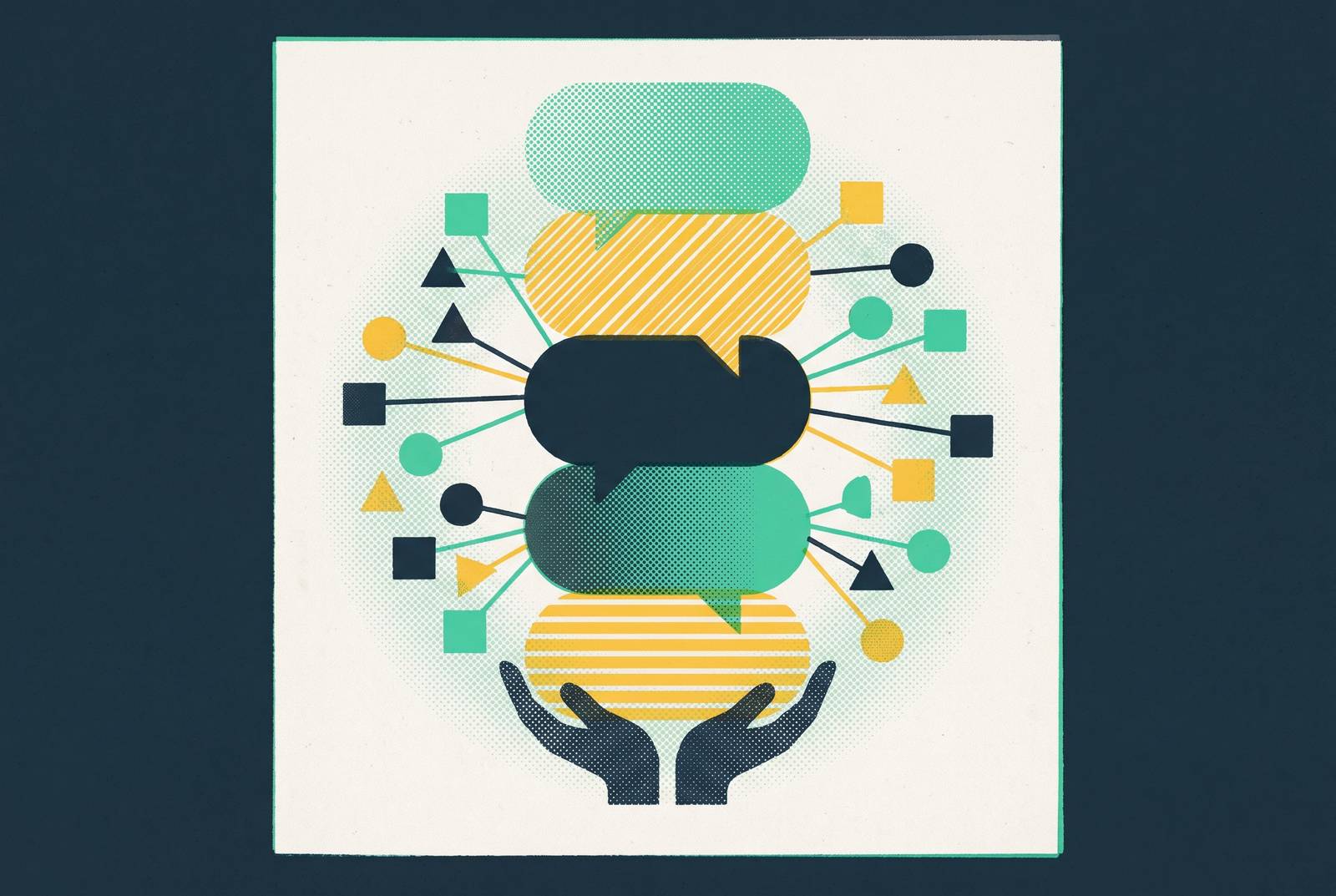
To keep client brand voice steady as AI products multiply, every agent needs to be able to query a shared, versioned brand context layer. Isolated prompt copies cannot keep agency teams aligned because updates do not propagate and outputs lack a common audit trail. That context layer must both store guidelines and connect to production checks and human approval gates.
Why brand voice breaks down when AI products multiply across delivery teams
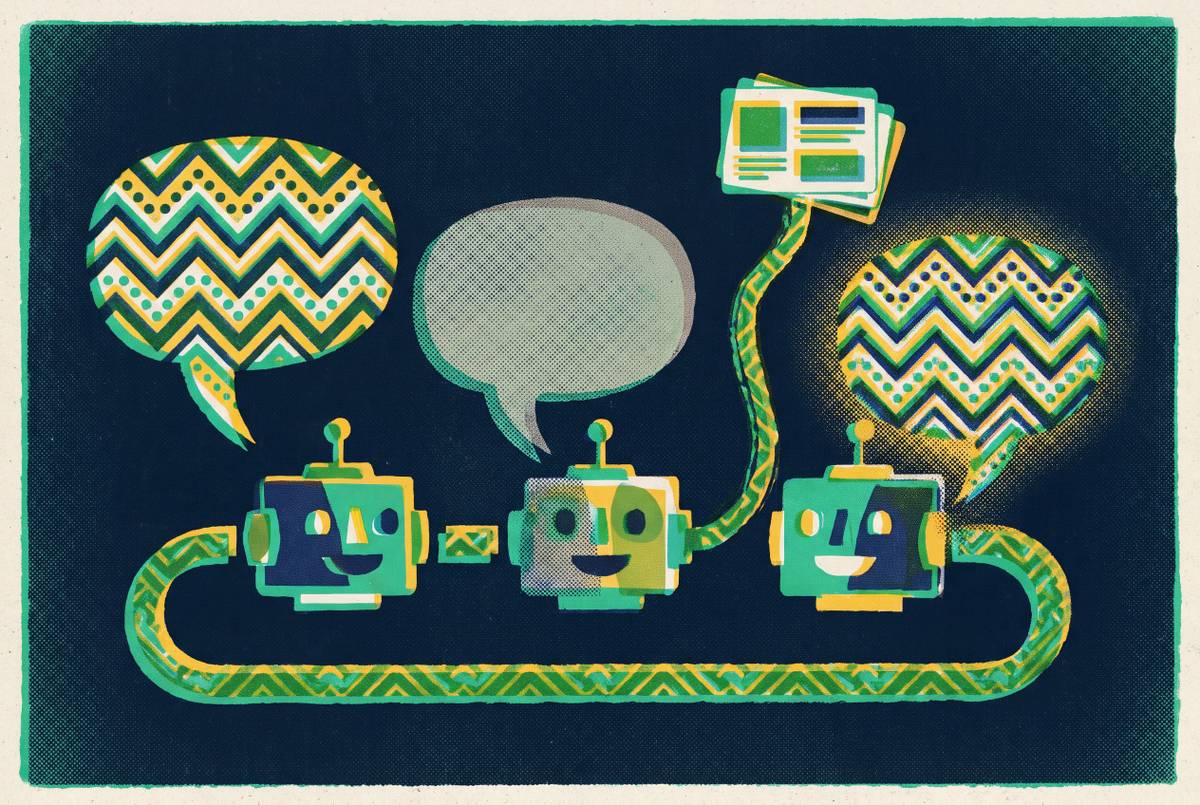
The problem becomes visible between two finished assets. An email passes review, and an advertisement does too, but their terminology or tone conflicts when they appear in the same campaign. Each agent has done work that meets its own instructions. Neither has checked a common source of brand rules. The failure sits at the handoff between independently managed workflows.
Better writing cannot repair that architectural disconnect. The underlying generative model is not the decisive variable in brand governance because the workflow determines which standards an agent receives and which constraints apply before publication. This becomes more consequential when orchestration removes the human who previously reconciled differences between production steps. When automation removes that checkpoint, the system must govern what the person used to catch.
Why prompt engineering alone cannot hold brand voice at agency scale
Careful prompt engineering helps an agent do a given task better, but it does not make assets created separately fit together. Prompts for a specific task stay session-bound, and other agents cannot see them unless the system shares them. Changing a terminology rule in one team's prompt does not change another team's instructions.
The “mega-prompt” era, roughly 2024–2025, exposed that distinction as agencies copied guidelines into prompts at scale. They ran into context-window limits and security risks but still had no reliable way to audit whether every agent followed the same rules. More context did not create a common authority. Each copied instruction set remained another maintenance obligation.
At agency scale, that obligation multiplies across clients, tools, and team members. When a client changes its instructions, teams must update every copy by hand, and any copies they miss leave workflows following different standards. Independently maintained prompts also lack a shared record connecting an asset to the rule version that governed it.
What brand guidelines need to look like before an agent can apply them reliably
A PDF, a Google Doc, or a design file can help people interpret a brand without giving an agent enough structure to apply it reliably. “Use our boldest tone for launch campaigns” leaves the agent to infer what counts as a launch and how boldness should vary by audience or channel. A structured schema makes those conditions explicit through campaign type, audience, approved vocabulary, tone range, asset rules, and compliance constraints.
Visual identity illustrates the difference particularly clearly. A human can interpret “primary blue” through surrounding examples, while an agent needs a hex code with usage conditions attached. Design tokens, taxonomy, permissions, relationships, and rule logic supply that precision. Voice needs equivalent treatment. A knowledge graph organizing terms, synonyms, and locale-specific variants gives agents consistent terminology across languages and channels.
Examples still provide necessary evidence of voice. The content corpus must be large enough that an agent is not extrapolating from a handful of samples, whether those samples are long-form or short-form. Together, they separate the authoritative definition of a brand from the tools that consume it, much as a shared package registry separates dependencies from individual projects.
How can every agent pull the same brand context through MCP?
Anthropic open-sourced MCP in November 2024 to give AI agents a standard interface for connecting to external tools and data sources. Compatible agents can query servers rather than requiring a custom integration for every pairing. MCP is now an open standard under the Linux Foundation's Agentic AI Foundation (AAIF), with formal working groups standardizing how servers expose data.
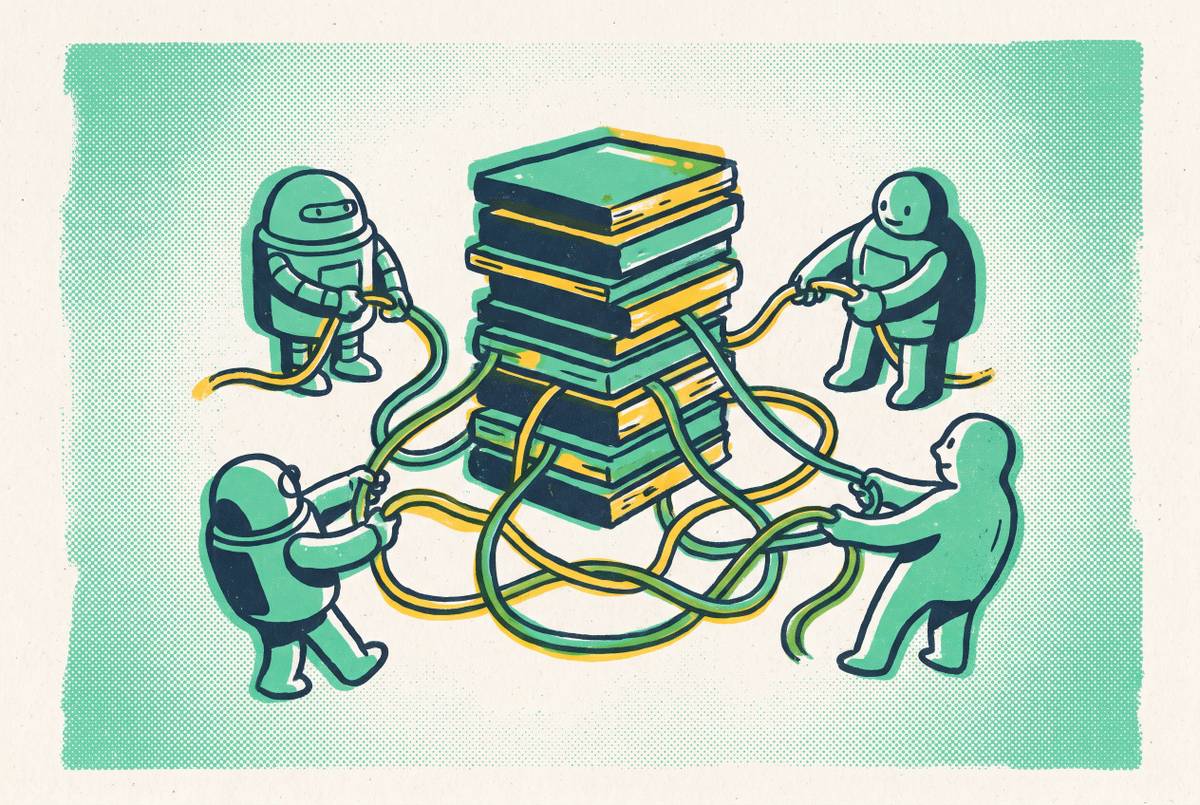
With the right servers and permissions, an agent can retrieve a voice profile, obtain approved imagery, generate an asset, and log the result within one workflow thread. The brief need not be reconstructed at each handoff. More importantly, separate email and advertising agents can retrieve guidelines and assets from the same source. They gain a compatible view of the brand without depending on separately maintained prompt copies.
Software fit depends on the layer an agency needs. Frontify's MCP server exposes guidelines, assets, creative templates, and workflow capabilities through permissioned tool packs. Aprimo's May 2026 MCP release connects external AI tools to permissioned content and expands agentic content operations. Notion and Google Drive servers support document retrieval, while GitHub provides content repository access. These are distinct access patterns.
Agencies choosing connections can start by configuring pre-built certified servers such as Salesforce, HubSpot, or Shopify before turning to custom engineering. The selection criterion is access to the required context through appropriate permissions. Connectivity alone is not enforcement. MCP does not orchestrate a content calendar or establish publishing gates, so those responsibilities remain with the surrounding workflow.
Why brand context must be versioned, not just centralized
A central store solves fragmentation only if connected agents receive its updates. A revised tone rule or new logo can exist in one authoritative location while an agent continues using an earlier copy. Shared does not automatically mean current. The useful analogy is code dependency management, where the authoritative source is versioned, dependent tools pick up changes, and the history remains traceable and reversible.
Versioning also makes flawed changes recoverable. If a rule update produces off-brand output, the team can revert to the prior version and identify which assets were generated under the flawed rule. For agencies serving multiple clients, that history connects finished work to the exact standards used for its creation. It supports approval and compliance. Governance added after deployment lacks this foundation and leaves teams correcting drift that has already spread.
How a "Brand Guardian" agent layer turns shared context into pre-publication enforcement
A shared, versioned source enables a specialized governance agent to evaluate drafts against stylistic and compliance rules before human review. In the “Brand Guardian Agent” model, a Creator Agent produces an asset, and the Guardian checks it against those rules. Work goes back for correction if it has a banned word, breaks a tone constraint, or uses the wrong visual treatment. The correction stays inside the production workflow.
Validation can operate at creation and pre-publication stages, covering style conformance, factual accuracy, and localization consistency. Human review is triggered when defined thresholds are exceeded, preserving judgment for high-stakes content without making every routine asset a marketing bottleneck. Visual checks can also detect and correct colors to official hex codes and composite proprietary fonts programmatically. Voice is not the only enforceable brand property. A decision log then ties each output to the rules that governed its evaluation.
Writer combines proprietary Palmyra large language models, a Knowledge Graph, agent-building tools, and governance controls for terminology, style, and compliance requirements. It is a good fit where teams need control over guardrails for regulated content. CreativeX's support documentation describes creative quality metrics including Aspect Ratio, Brand Early, Optimal Length, Safe Zones, Sound On, and Supers Present. Those checks cover a different validation layer and do not check voice to the same extent. The architecture therefore depends on matching each check to the kind of failure it can actually detect.
What agencies building multi-brand workflows have learned in practice
Frontify's June 2026 product keynote presented MANN+HUMMEL's approach to brand consistency at scale across teams, markets, and channels. The story covered how teams work together, governance, and AI-powered workflows. That establishes an enterprise adoption pattern, with improvements in brand performance left unquantified. The distinction is important when translating examples into agency decisions. A presentation about shared governance does not, by itself, demonstrate how much review time an agency will save.
Block built more than 60 internal MCP servers and put Goose into use, its open-source AI agent that runs on MCP and was first built for internal use. Its use cases included legacy code refactoring, database migration, and compliance workflows. Block built the servers in-house for security and control. At scale, connectivity can become a maintained organizational capability.
Dust's “multiplayer” architecture provides a complementary framing in which people and agents use the same content library, guidelines, and data sources. Shared context is therefore not an agent-only concern. The operational lesson for agencies is to define who commissions, performs, reviews, and approves each task, including what happens when an output is ambiguous or off-brand. A one-page workflow map for each major content type can show where those boundaries lie. Social posts, campaign briefs, and product copy need named handoffs rather than an assumption that someone will reconcile the work later.
The strongest objection to shared context: false consensus across agents
If the central source contains a flawed rule, every connected agent can apply it consistently and propagate it faster than fragmented prompts would. This false consensus risk is amplified by model monoculture, where agents share underlying biases, and conformity bias, where coordinating agents reinforce one another's interpretation.
That objection limits what centralization can promise. A common source reduces disagreement about the rules but cannot establish that the rules themselves are sound. Versioning makes flawed changes identifiable and reversible, while human review gates provide an independent check for high-impact content. Observability dashboards tracking conformance rates and drift scores help expose problems before they compound.
The narrower objection to MCP is equally valid. Approval chains and controls governing whether an asset should be published must be designed and maintained separately from the connection standard. Avoiding a return to isolated prompts therefore requires a governance system in which shared context, review, and publication controls have explicit responsibilities.
How to build shared brand context into a multi-agent delivery workflow before drift compounds
The implementation sequence follows the dependencies between these layers. Agencies should first convert voice guidelines into machine-readable style rules, glossaries, locale-specific vocabularies, and compliance constraints. Visual identity needs structured tokens that set out when to use colors, the typography hierarchies, and the restrictions on logo use. Each client needs a separate structured profile. Independent versioning prevents a rule change for one brand from contaminating another.
Those profiles should then move into a versioned store designed to serve structured context on request. Every change needs a traceable, reversible history, and each asset needs a connection to the rules used to create it. Agents can then connect through MCP where supported or through a REST API. Pre-built certified integrations should precede custom builds where they meet the requirement. Agents that handle drafting, design, localization, and distribution must query the same client source.
A governance agent should return off-brand work for correction before human review, with explicit escalation triggers for claims, pricing, regulated content, and high-visibility placements. Conformance metrics and drift scores make those checks observable across a campaign. Publication remains a separately controlled step. Approval chains must state which outputs need a person's judgment before they can be released.
Finally, teams should make brand updates as versioned changes. Connected agents should pick up the new version automatically, while post-publication monitoring feeds findings back into policy refinement. The loop continues after an asset ships. Stable brand voice depends on maintaining that loop as clients, teams, and AI products multiply.