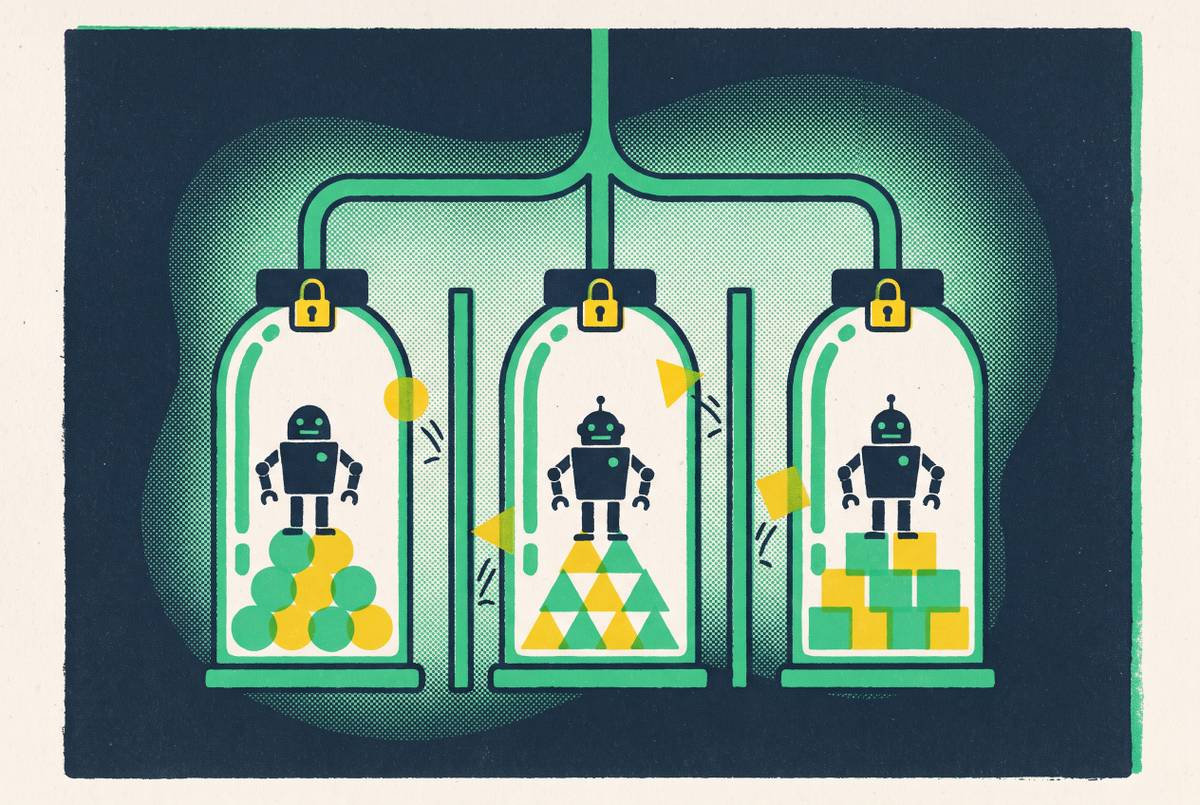
Brand Context Tooling Your Agency Agents Can Subscribe to Instead of Inherit From Prompts
Agencies can fix brand drift by querying one versioned source.
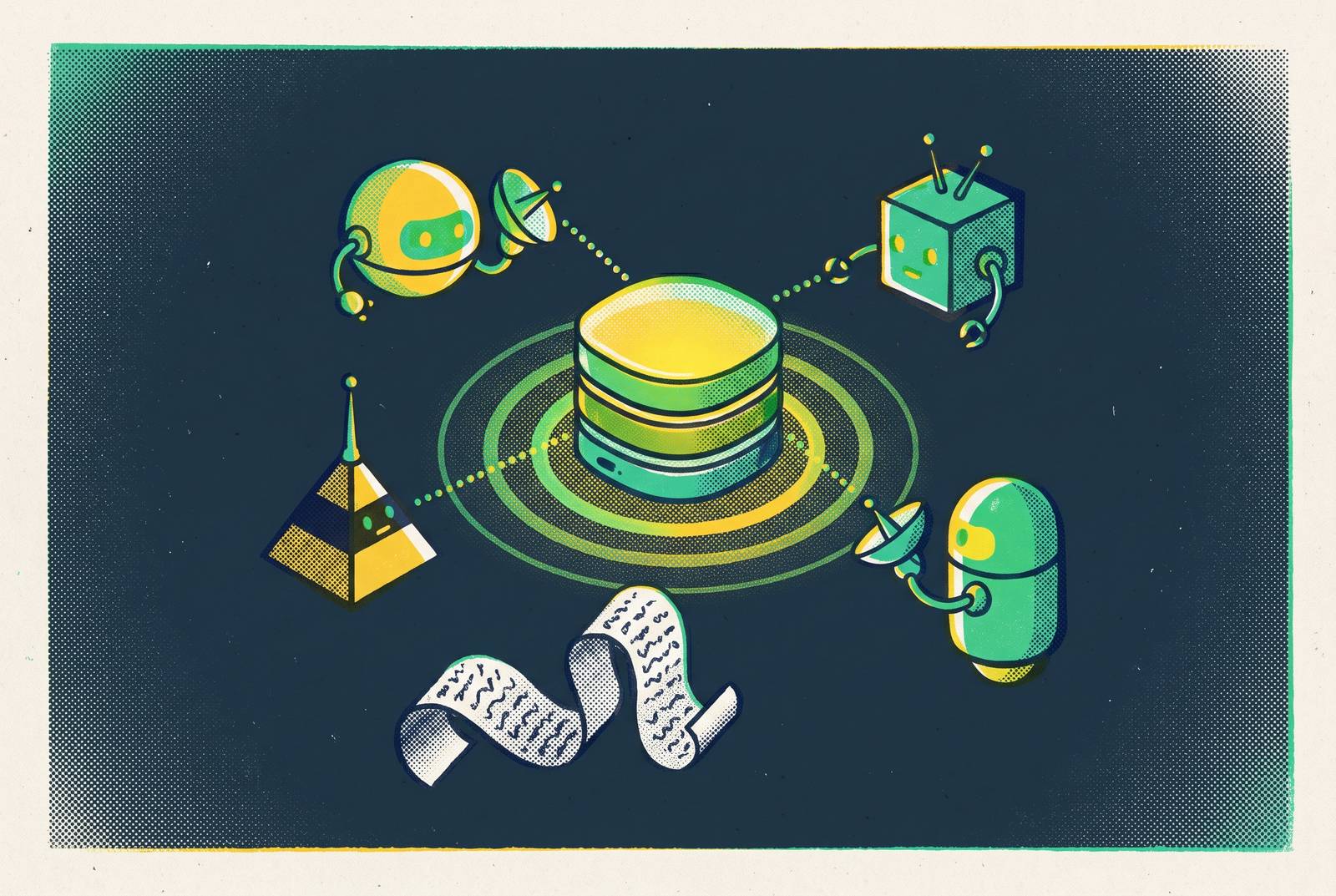
A brand context layer for AI agents separates shared brand identity from the instructions for each task. Agency agents should query one authoritative, versioned source rather than inherit separate copies of brand rules in their prompts. This architecture keeps the brand from drifting at handoffs and lets agencies update each client’s context without rebuilding every agent that uses it.
Why brand context in prompts is an architectural problem, not a prompt-quality problem
Two agents working on the same account give a client different answers about brand tone. One uses the current voice guidelines, while the other follows an older definition embedded in its system message. Both may be following their instructions correctly. The inconsistency begins before either agent writes anything, because the agency has made each agent responsible for holding its own account of the brand.
That arrangement combines two kinds of information with different lifespans. Brand voice, visual rules, and naming conventions say who the brand is and stay much the same over time, while the brief for today’s campaign email sets out a task that changes. Pasted together into system prompts, they compete for attention and multiply maintenance work. These context islands each hold a brand definition that can drift independently, so a voice change or logo-usage update requires someone to find every copy. Any agent missed in that process can immediately produce work based on superseded rules.
What “subscribe, don’t inherit” actually means as an architecture
The distinction is between copying brand rules into every prompt and querying them from one source when work begins. In the second model, the campaign brief still tells an agent what to produce, but the shared brand layer supplies the identity that governs the result. The two inputs have separate jobs. A new brief does not require a fresh description of the brand, and a brand update does not require rewriting the brief.
“Subscribe” describes that relationship to a maintained source. Brand context lives in one authoritative place, with a declared version, and connected agents read the same state. A change at the source becomes available to every downstream agent through that connection. Inheritance works the other way around. Once a definition has been copied into separate prompts, the copies can diverge silently, with no shared mechanism for identifying which agent has fallen behind.
For an agency, the shared infrastructure must also preserve the distinction between clients. One system may serve a dozen brands without turning their voices, visual rules, and restrictions into a common pool. Each brand needs its own authoritative context. As the agency adds accounts, it can reuse the connection and management model for each new mix of client, tool, and task.
How MCP makes a subscribable brand layer buildable today
The Model Context Protocol, or MCP, gives AI applications a standard way to connect to external systems. Anthropic’s MCP announcement describes how developers make data available through servers and how AI applications connect as clients. Instead of requiring a bespoke integration for every agent and source, a compatible application uses a uniform interface to discover and interact with the capabilities a server exposes.
Resources supply read-only structured data, including voice guidelines, visual rules, naming conventions, and a product catalog. Tools can do work as well as return reference material. An agent might retrieve the brief template for a campaign type or check a color against the palette. Prompts supply templated instructions for applying the brand rules to a task, without making each agent’s private prompt the authoritative home of those rules.
The protocol standardizes access so a model can call a capability without needing to know whether it reaches a local database or a remote service, but the underlying system still needs usable brand definitions. Webflow uses the protocol in its MCP server, which gives connected agents instructions for each site. Block demonstrates another use of the protocol through reusable internal connectors. These examples establish a practical transport for shared context, rather than a reason to treat connectivity itself as the solution.
What brand identity needs to look like for agents to actually use it
A PDF brand guide is a document for people to read. Making the document available does not by itself make a tone requirement or logo restriction reliably retrievable. Structure supplies the missing precision. A usable tone setting has an explicit value, a source, and a last-updated timestamp, rather than existing only as a descriptive sentence somewhere in a guide.
The structure also needs to distinguish brand from design. Brand covers meaning, voice, naming, and positioning, which can survive a redesign. Design covers color ramps, component states, layout rules, and typographic specifics, which may change with a campaign or product update. This separation limits irrelevant context. An agent working on positioning does not need every component state, while an agent producing a page needs the applicable design rules as well as the brand’s meaning.
JSON-LD schema markup gives an AI system explicit canonical identity signals, including a brand’s name, logo, description, and social profiles. Tokens, component schemas, and machine-parseable specification files make other parts of the system available for programmatic use. No single format solves the whole problem. The requirement is that rules be structured, queryable, and versioned, so an agent can retrieve the relevant definition rather than reconstruct it from presentation material. Establishing that structure is a one-time investment in a foundation that makes downstream agents more reliable, even as the definitions themselves continue to change.
What agencies using shared brand context have learned in practice
Alan, the health insurer, deployed agents on the Dust platform with centrally available brand guidance. It has both a company-wide Brand Voice Guardian and a Client Interview and Testimonial Agent that turns call recordings into stories that follow Alan’s case study template. Customer story production dropped from two days to a few hours. Brand context does not have to be re-specified for each story before the agent can begin useful work.
Qonto’s Tolki agent addresses a different coordination problem. It accesses a database of more than 200 localization instructions to maintain Qonto’s distinctive voice across French, German, Italian, and Spanish markets. The instructions remain available as a body of guidance rather than being reconstructed independently inside each localization task.
Block built over 100 MCP servers for agents used by thousands of its employees. Block shows how connectors are built, without showing a result for a specific brand. The transferable pattern is few agents using many reusable standard connectors, instead of each agent needing its own integration with every source. That pattern separates access from the agent itself. An agency can separate access in the same way to keep brand context available as its tools and workflows change.
Webflow’s MCP server makes the brand-specific relationship more explicit through Agent Instructions defined for each site. Agents get these instructions automatically when they connect, including the conventions for the brand, design-system, and CMS. Rules apply to every action, while skills provide guidance to reference when relevant. The server also enforces existing user roles and permissions and records changes in the site’s activity log.
These implementations serve different operational needs, rather than establishing an interchangeable vendor ranking. Alan’s Dust deployment shows shared voice and narrative guidance, Qonto shows centralized localization instructions, and Webflow provides site-level rules tied to permissions and an activity record. The common dependency is a maintained source of context. When a logo agent and a landing-page agent read the same brand-foundation object, they start work together with the same brand definitions. It does not remove the need to assess their finished work.
Is centralized brand context worth it as an agency scales?
Centralizing context introduces a genuine dependency on the shared source. A single point of failure can affect the agents that rely on it, so there is still a risk of things going wrong even with fewer prompts to maintain. Where regions or sub-brands own different parts of the identity, a federated model with strong contracts between layers can be more useful than a perfect central catalog delivered too late. Centralization should establish dependable authority while allowing brand decisions across organizational locations.
The cost of supplying context also needs planning. Each connected server describes its schema to the model, and a large collection of tools can consume significant context before the user’s first message. More connections can add cost and noise without improving the agent’s access to the rules relevant to its task. The same distinction that separates brand from design therefore also informs the architecture, because useful access is not the same as loading everything.
The decision is consequently about coordination costs and control. An agency whose agents repeatedly need the same changing brand definitions has a different maintenance problem from one doing isolated tasks. Shared context addresses the former directly. Its value grows where updates otherwise require chasing separate prompts, but that benefit has to be weighed against the work of structuring the source and managing its use.
Governance is the harder planning question. Someone must have the right to change the shared voice definition, because a change can affect every downstream agent, connected product, and generated output that uses it. People must have full control over brand voice and creative direction. The layer enforces the rules people set, but it cannot decide what the brand should mean or when a creative departure is justified. Clear ownership of changes therefore needs to be established before deployment as part of the system’s operation.
Keeping brand context current as agents proliferate
A shared source remains useful only if it operates as a versioned, managed system. An occasionally edited file that gets re-uploaded does not provide the same control over changing definitions. Every change needs a record of what changed, when, and why, and agents need to work from a declared version. Versioning makes correction a controlled operation. When a change produces bad outputs, rollback becomes a revert rather than a manual search through every agent’s system prompt.
A subscription maintains a relationship to a source that can be updated, while inherited copies cannot be recalled through the original act of copying. The distinction becomes more consequential as agents spread across campaign images, web pages, launch decks, email, and social. Each new agent is another possible source of drift. For agencies serving several brands, separate context layers, version histories, and review records allow the infrastructure to grow without requiring a separate prompt architecture for every client.
Finished output needs to be checked against the current version of the brand layer, with explicit evidence for each rule tested. That evidence gives the team a defensible record of the brand definition used to review what shipped. Access alone is not proof of compliance. The review step turns an efficient distribution system into a trustworthy brand operation.