Why AI Agents Revert to Generic Voice Mid-Workflow and How Brand Context Subscription Fixes It
Brand context subscription keeps voice rules in every step, not just the first.
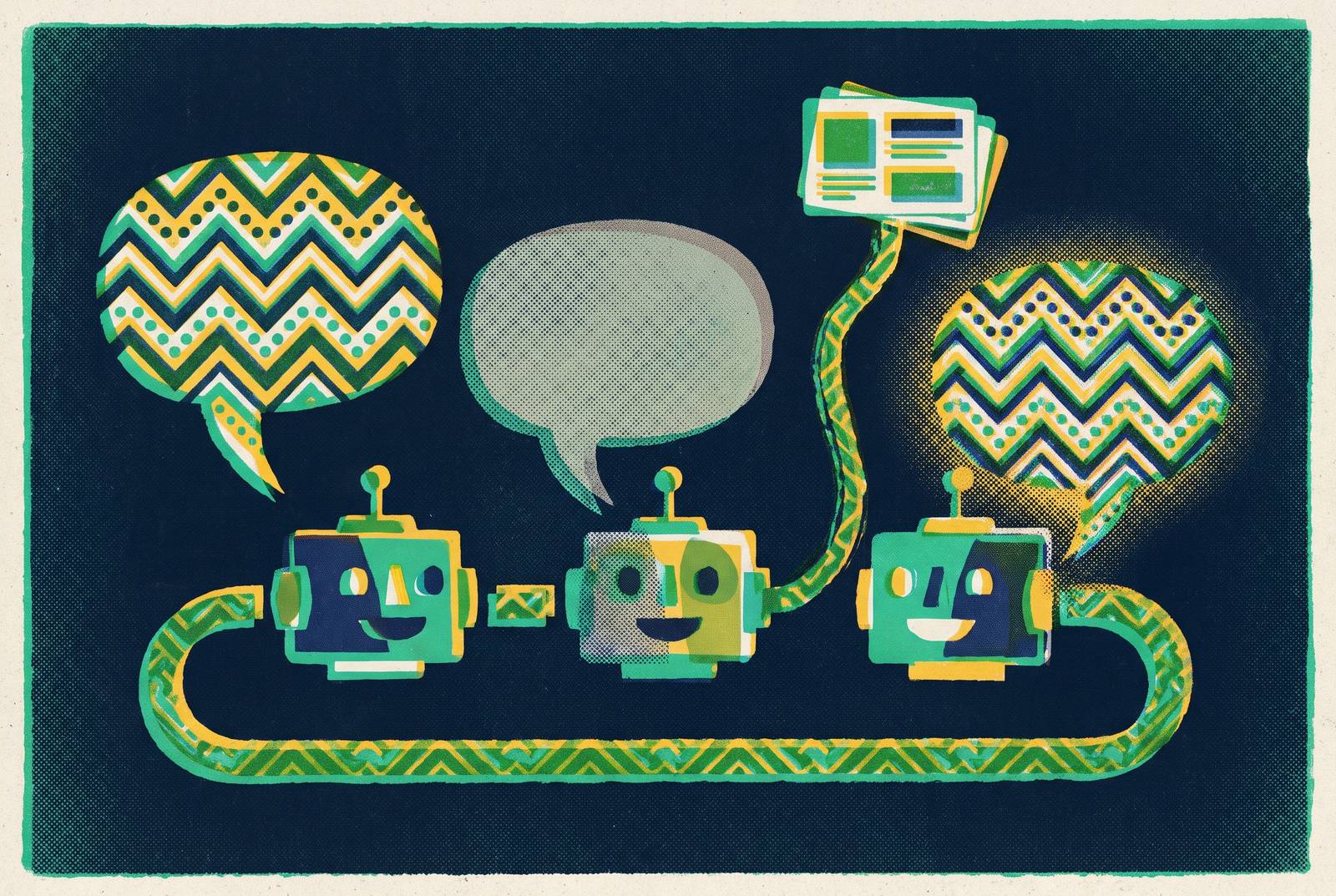
AI agents revert to generic voice mid-workflow because brand instructions lose their place in finite context. Brand context subscription addresses this by making authoritative brand rules available at every generation and review step. For agencies that manage multiple brands, it replaces handoffs that can lose rules and copies of guidelines with a shared infrastructure layer that keeps each client’s identity distinct.
Why brand voice disappears mid-workflow — and why it isn't the model's fault
A marketer reviews a campaign draft and recognizes the problem immediately. The copy is fluent, but it sounds interchangeable. Earlier output sounded like the brand, but later drafts have lost the phrasing, emphasis, and boundaries that made it stand out. Blaming the model’s ability to handle tone is understandable, but it misses what changed during the workflow. The agent is no longer working with the same effective brand context it had at the start.
That distinction separates a capability problem from an architecture problem. An agent can apply precise voice rules when those rules are available, but it cannot reliably preserve instructions that the workflow stops supplying. “Friendly and professional” describes a broad average rather than a recognizable identity, so generic output may appear compliant even as the brand disappears. As AI writes a larger share of published content, small shifts in tone, values, and messaging accumulate into fragmentation.
How a finite context window turns brand instructions into the most disposable content
A context window has a finite capacity. Brand guidance loaded when a session starts shares that space with every tool response, retrieved document, task instruction, and intermediate result that comes after it. Those additions have the information needed for the current step, while voice traits and banned phrases can seem less useful right then. As the workflow fills or compacts its context, abstract brand rules are especially vulnerable to displacement.
Urgency here means relevance to the immediate task. A retrieved document may supply the facts needed for a draft, while a voice rule governs how those facts should be expressed. The agent can still produce a complete answer. The failure can therefore remain quiet.
Handoffs create another point of exposure. Each agent in a handoff loads its own context, so it does not automatically know what the previous agent knew. A draft may cross that boundary while the rules behind it do not. Brand consistency therefore depends on what each agent receives.
Why longer, more capable workflows make the drift problem worse, not better
A workflow that spans teams may get better at each task even as the finished campaign becomes less consistent. Each new step loads context again, and the brand’s constraints must make it through each handoff. More agents do not automatically provide more resilience.
Campaign production makes the consequence concrete. As AI accelerates output, the bottleneck shifts from producing individual assets to turning them into a coherent campaign. Copy, imagery, and channel adaptations can each look right on their own yet show different versions of the brand. When work is produced faster, governance has more to cover.
Voice also affects more than recognition or aesthetic preference. In AI products, tone shapes how users interpret confidence, uncertainty, and errors, which influences whether they trust the system. A change in voice can therefore change the meaning a user takes from an otherwise similar response. Treating voice as part of the reliability layer gives consistency an operational purpose.
Why reloading brand guidelines at each session doesn't fix the structural problem
Pasting guidelines into every new session gives the agent a better start. It does not protect the rest of the workflow. The same competition for context begins as soon as tools return results and agents accumulate working material. A carefully written guide can lose influence even when someone remembered to load it correctly.
A person must identify the right guidance, supply it to the next agent, and repeat the work throughout the chain. That dependence undermines the efficiency agentic workflows are meant to provide. It also treats every transition as a fresh opportunity for omission.
Placement is the practical distinction. A guide stored in a folder depends on someone finding it, while a guide the AI reads before writing by default is part of execution. Better prompts can sharpen the rules, but the workflow must still deliver them when they are needed.
What brand context subscription means and how it changes the architecture
Brand context subscription is a vendor-independent architectural pattern. It treats brand identity as a live, authoritative layer that agents can query throughout a workflow. Instead of loading guidance once and hoping it remains influential, the workflow retrieves the relevant rules at generation time. Availability becomes a property of the system.
Model Context Protocol, or MCP, gives an agent a channel to call external tools and get information. In this pattern, that channel supplies actual brand data, including voice rules, style guidance, and approved assets. The connected context layer must supply the authoritative content.
BrandCodex’s MRBS specification, or Machine-Readable Brand System, illustrates the artifact this requires. It expresses colors, typography, voice, and logo rules in structured JSON/YAML through a canonical MCP endpoint. AgencyUK’s “Brand OS” describes the broader design principle, which includes strategy, components, relationships, constraints, and examples. These approaches address related parts of the architecture, but their descriptions do not establish a ranked vendor comparison. The useful distinction is between a transport mechanism, a machine-readable brand specification, and the context those mechanisms deliver.
What brand identity must look like for machine consumption to work
A subscription needs rules an agent can apply. A condition such as “if channel=LinkedIn, tone=professional” states when a rule applies, whereas a general claim about professionalism leaves that decision open. A traditional PDF can contain useful source material, but it is not itself a queryable brand system.
A practical structure separates identity, style, narrative, context, and governance. Identity defines what the brand represents, while style specifies how it speaks and appears. Narrative holds the messaging that should remain coherent across outputs, and context defines how its expression changes by channel or audience. Governance establishes the constraints and standards against which work is reviewed. These distinctions help agents retrieve rules for a particular task without treating all guidance as interchangeable.
Specific voice traits make those rules usable. Three to five traits, each paired with its opposite boundary, turn a preference into a constraint, such as “witty, never snarky.” Do’s, don’ts, and banned phrases add concrete limits. Coverage must also extend beyond campaign drafts to refusal style, error handling, summaries, labels, and microcopy.
Visual content needs more than descriptive text. Locked reference assets supplied as image conditioning address the risk of brand elements warping during image-to-video generation. A machine-readable identity must therefore provide both applicable rules and the approved assets needed to execute them.
Keeping brand context current when the brand itself changes
A connected system can still send out old guidance. Positioning changes, product launches, visual updates, and new audiences can all make yesterday’s brand context wrong for today’s output. Subscription therefore needs to track changes by version as well as keep context available. When the brand updates, connected agents and products need the new version without separate manual edits to every prompt or integration.
For agencies, each client has its own lifecycle. The context layer must track concurrent versions across brands rather than treating an update as a global replacement. Otherwise, an integration that was correct at setup gradually diverges from the brand it represents.
Reviewing AI-generated output against the brand before it ships
Supplying the right context does not prove that generation honored it. Automated review closes that gap before publication. One agent can generate the draft, another can assess voice and messaging, and another can verify compliance. This makes silent drift visible within the workflow rather than leaving discovery to occasional human spot-checks.
Generation and review need to use the same authoritative brand context. If the review agent reads the rules differently, the agents may disagree because their standards differ, even when the draft follows the rules. Review then tests application of the rules.
A useful finding must identify the failed constraint. “Off-brand” is a verdict, but it does not explain what needs correction or why. Evidence tied to a specific rule makes the result actionable and supports a corrective loop. The review step therefore changes subscription from a source of helpful instructions into a governance mechanism, checking whether those instructions shaped the output that is about to ship.
How does brand context subscription prevent drift in agency workflows?
A campaign brief starts the workflow, but the brief alone does not define the client’s brand. Before it drafts, the generation agent queries the client’s subscribed context through MCP and gets voice rules, visual constraints, and guidance for the channel. The agent then produces its draft using that material. Brand context arrives when it is directly relevant to generation, rather than depending on its survival from session open.
A review agent queries the same subscription and evaluates the output against the same context. Verified work returns with evidence for each check. This separates the creative artifact from the authority used to judge it, so the handoff does not have to preserve both inside a single conversation.
For visual and video work, the context layer also supplies locked reference assets as image conditioning. Copy and imagery can then use one governed brand definition, with text rules and the assets needed to guide visual generation. MCP-compatible agents include Claude, ChatGPT, Cursor, and Codex. Products can connect through a REST API and use the same subscribed context without keeping their own copies.
For an agency expanding beyond five clients, client count alone does not establish the return on a centralized system. The operational case depends on repeated handoffs, distinct client rules, changing versions, and automated review requirements. Software fit follows those criteria. MCP connectivity is useful, but it does not substitute for per-brand context, versioning, approved assets, and evidence-based review.
Why brand context governance determines which agentic teams stay coherent at scale
Brand voice no longer belongs only to the team that writes the style guide. Many departments can publish AI-assisted text that audiences interpret as the brand, so consistency depends on the infrastructure shared across those workflows. Local prompts may improve individual outputs while leaving the organization fragmented. Governance connects those local decisions to a common standard.
Gartner analyst Andrés García-Rodeja stated at the 2026 Data & Analytics Summit that by 2028, a large majority of agentic analytics projects relying solely on MCP will fail because they lack a consistent context layer. That forecast concerns analytics, but it highlights the architectural distinction. A protocol connects an agent to information. It does not, by itself, establish which information is authoritative or current.
Each client needs its own rules and current version, available to every relevant generation and review step. The organizational advantage comes from making those distinctions enforceable as work expands.
Brand voice then becomes a technical objective rather than a creative preference left to individual agents. The architecture is clear, with machine-readable identity, versioned delivery, and review against the same authoritative context. That makes coherent output a system responsibility instead of a test of whether the first prompt survived.