AI Champions to AI Builders Inside Agency Teams
Agencies must redesign workflows around AI delivery, not just adopt tools.
Keeping brand consistent across agency and multi-brand AI workflows requires shared, versioned brand context, controlled handoffs, and review against each client’s rules. “AI Champions to AI Builders Inside Agency Teams” examines why ownership must move from choosing tools to designing that system. The builder’s job is to make consistent, commercially safe delivery repeatable across people, agents, and client accounts.
Why the AI champion role inside agencies is under pressure to change
An agency can give everyone access to AI and still lack a reliable way to move work from a client brief to an approved asset. The person who introduced the tools may have solved access, training, and experimentation without establishing how the whole production process should work. That gap becomes harder to absorb as content demand climbs while budgets stay flat. Faster individual tasks do not necessarily produce more finished work at a consistent standard. Agencies need scale, which depends on how those tasks connect.
The original AI champion answered a narrower question about which tools the team should use. Finding useful products, trying them out, and getting people to use them helped when the main barriers were getting people interested and giving them access. In 2026, however, agencies face a delivery question. Superside’s agency research distinguishes teams that bolt AI onto existing workflows from those that rebuild their operating model around it. The teams differ in how they handle brand context, quality control, and workflow design.
What the shift from tool adoption to operating model redesign actually requires
Operating model redesign starts with joining up the work of AI delivery, so success goes beyond how well each tool works on its own. Superside’s comparison of AI-powered and AI-native agencies places that distinction at the center of its framework. In AI-native operations, connected systems supply brand context, while people design, supervise, and improve the workflows. Built-in checkpoints make quality repeatable. The important change is therefore internal discipline.
That discipline has to resolve three linked questions, beginning with where brand context lives and how every agent receives it. The next question concerns how work moves from brief to asset to review without losing quality at each handoff. Finally, that discipline must establish who owns the design of that whole process. These questions belong together because context, workflow, and accountability govern the same delivery chain. Answering them requires someone who can design the connections between stages.
The brand consistency problem that makes this redesign urgent
A strong AI-generated asset does not prove that an agency can maintain a coherent campaign. A campaign brings together different team members, tools, and prompts, each of which can introduce variation. Across handoffs, colors can shift slightly and lighting can change until the work stops reading as a unified whole. This cumulative drift is known as “style creep”.
Generative output is probabilistic, so a brand book does not function as a fixed constraint merely because someone refers to it in a prompt. A small prompt variation or a model update can change the result in ways a brand director immediately recognizes as wrong. A more elaborate shared prompt may improve an individual generation, but it does not establish control across a production campaign. Preventing drift requires continuity of context through the handoffs and checks against the brand before delivery.
The consequences extend beyond appearance. Under enterprise brand integrity clauses, differences in how products look or shifts in brand colors can break the terms of a contract. An AI-generated campaign can therefore fail an audit even when its individual assets look polished. Brand consistency is part of commercial delivery.
Why doesn’t brand context in people’s heads and shared folders scale for AI?
Agencies often lack the structured context needed to produce on-brand work. Agency teams have traditionally relied on guidelines, shared files, and colleagues who understand how to interpret them. That arrangement lets a person supply nuance that the written material leaves implicit. An agent does not inherit that shared understanding simply because it joins the workflow. Without explicit context, it must infer what the team already knows.
PDFs and slide decks need interpretation to provide dependable machine-readable rules. Interpreting or summarizing them can lose the distinctions that make a brand recognizable. Structured markdown files, design tokens, and headless CMS fields for voice attributes and approved messaging make those distinctions available programmatically. A brand context folder can keep voice, visual identity, and positioning together for agents to refer to over time.
The Pernod Ricard / Ballantine’s case illustrates the cost of incomplete context. One popular AI model categorized Ballantine’s Scotch as a prestige product when it is a mass-market offering. The error reflected missing information and inference. The same weakness matters across an agency’s client roster, where each brand has distinctions that general knowledge cannot reliably supply.
What brand infrastructure for agents actually looks like in practice
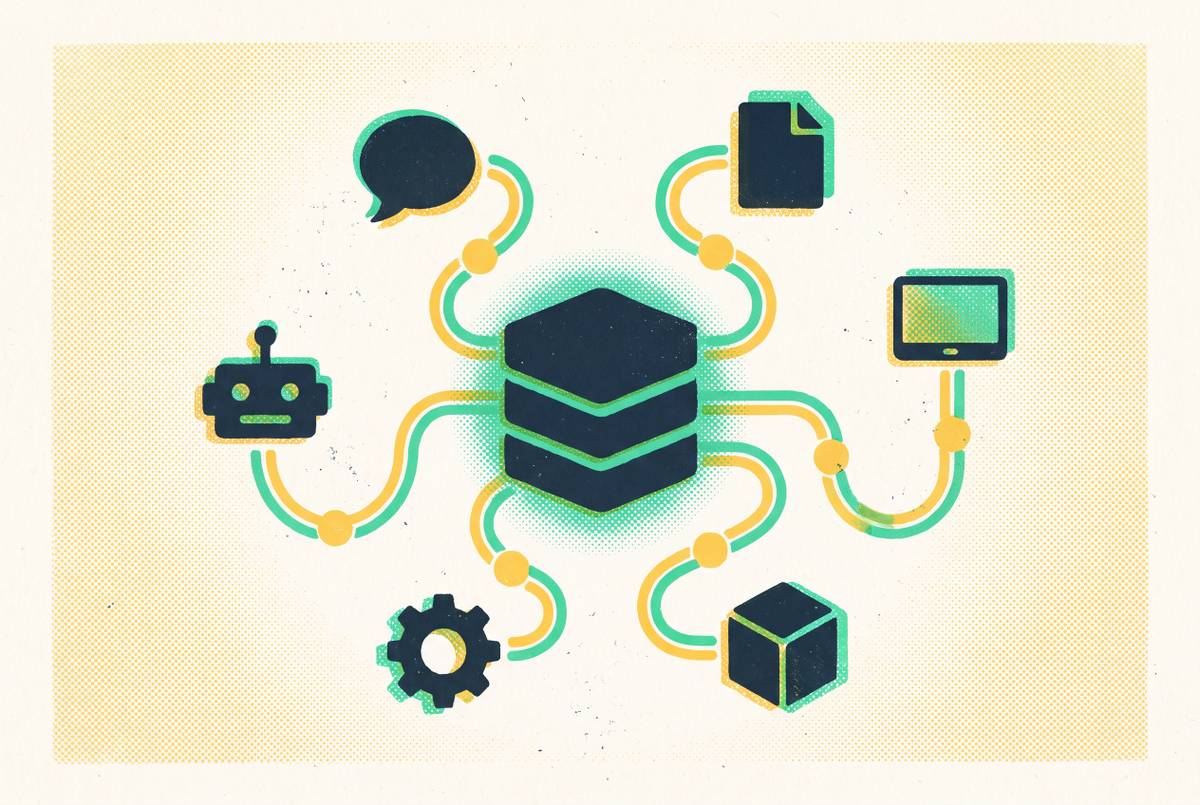
The builder creates a shared layer between a client’s brand and the AI tools that work on it. This layer holds structured voice profiles, design tokens, positioning, and approved messaging as canonical context. Each agent session inherits that context rather than reconstructing it from whatever material a user supplies. Versioning then keeps changes from becoming competing sets of instructions. When the brand changes, connected agents need the source brought up to date in place of copies from earlier work.
That foundation is distinct from the context of the current task. Working memory holds the in-flight details, while feedback memory captures what was approved, what was rejected, and why. Together, these layers prevent every session from starting at zero. In multi-agent workflows, each agent also needs to know which work it owns because shared context alone does not assign tasks. Without both, tasks can be dropped or duplicated while outputs diverge.
Connectivity makes this architecture usable across tools. Anthropic released Model Context Protocol, or MCP, as an open standard in November 2024, so agents can get live context. One implementation is Rainbrand, which turns a brand’s identity, guidance, and files into shared, versioned context available through MCP or a REST API. Connected agents work from the same source and receive the new version when the brand changes. The agency can reuse this infrastructure across accounts while keeping each client’s context separate.
How AI-native agencies are structuring this as a role, not just a responsibility
That architecture gives the builder a concrete remit inside the agency. The champion spent time finding tools, demonstrating useful results, and persuading colleagues to try them. The builder spends time designing client context, connecting workflow stages, and maintaining the controls that make delivery reliable. The unit of work changes from a successful experiment to a repeatable production process.
Day to day, this means separating generation, refinement, and governance into managed stages. The builder establishes where human review belongs and maintains brand context as both client guidance and AI tools evolve. Quality no longer depends solely on the person operating the tool noticing every problem. Instead, the process gives the team defined points at which work must meet a standard. This gives someone responsibility for improving the workflow instead of leaving it to whoever runs into a failure.
The remit also includes deciding when AI is the wrong production method. Superside’s AI Creative Director Pedro Brasil says a traditional workflow can still be the right choice for 3D work that needs exact control over geometry, materials, lighting, and repeatability.
Where human judgment stays in an AI-native agency workflow
A controlled workflow removes avoidable ambiguity so people can concentrate on decisions that require interpretation. AI can broaden exploration, but deciding which direction fits the brief remains a human responsibility. The distinction is between generating possibilities and judging their value. A system can support that judgment without replacing it.
A concrete example is shadow placement in a luxury image. Whether the result reads as expensive or cheap can require a senior designer’s judgment, regardless of the quality of the underlying tooling. These decisions take more than checking whether the work follows a color or logo rule. They concern what the finished work communicates in context.
Brasil identifies approval speed as the bottleneck that follows faster creative production. If feedback still moves at the old pace, the agency loses the time it saved during generation. The builder consequently designs the human review stages. The US Copyright Office concluded in January 2025 that purely AI-generated material is not protected by copyright. Human transformation in commercial design work is therefore legally consequential as well as creatively important.
What agencies need to build or buy to make the builder role functional
The practical stack begins with structured brand context and a way to route it to the right task. It also needs explicit generation, refinement, and review stages, followed by a mechanism for checking finished work against the brand. These are separate workflow needs, even when one product covers more than one. Build-or-buy decisions turn on whether the agency can maintain that chain across clients. A useful generation tool does not, by itself, solve context distribution or final review.
Image tools address a different part of the workflow. Adobe Firefly’s custom models, with expanded access in March 2026, let teams train on their own images for character, illustration, and photographic styles. Its training on Adobe Stock and licensed content addresses the commercial-safety side of production. Midjourney’s --sref style reference parameter gives teams a way to keep the same visual style across generations during moodboarding and creative direction.
Adobe’s multi-year partnership with Runway, announced in December 2025, brings generative video into Adobe Firefly and, over time, deeper into Creative Cloud. This connects generation with the tools used to edit, finish, and deliver work. Adobe Marketo Engage’s MCP server, launched in April 2026, provides agent access to marketing operations. Audiense’s MCP connectors, launched in July 2025, bring audience insights into Claude and ChatGPT for segment comparisons and persona generation.
At the brand-control layer, Rainbrand produces a task-specific Brief covering logo, type, color, imagery, and voice rules, then reviews finished work against those rules with evidence for each check. Agencies can also assemble structured reference files, connectivity, and review gates as their own system. The relevant criteria are distinct client context, current guidance, task-specific rules, and review evidence. Those criteria keep the decision focused on workflow coverage.
How agencies should structure AI ownership as the builder role takes hold
Agency leaders need to be clear about who owns AI across teams and who answers for how well the system works. Those outcomes include brand consistency across deliverables, workflow reliability, client audit readiness, and the quality of agent context. Informal ownership served early adoption because enthusiasm could move experimentation forward. It is less suited to maintaining a production system that crosses creative, operational, and client responsibilities.
The agency can apply one operating pattern while preserving separate context, rules, and review gates for every account. The decisive choice is whether someone owns reliable AI delivery across the agency, or whether that responsibility remains scattered among the people using its tools.